

Last updated September 10, 2026
Full 25-point door and opener safety check with every visit - springs, cables, rollers, tracks, and your LiftMaster or Chamberlain opener included
You get a price before we start. It does not change when the truck arrives.
 Before
 After
After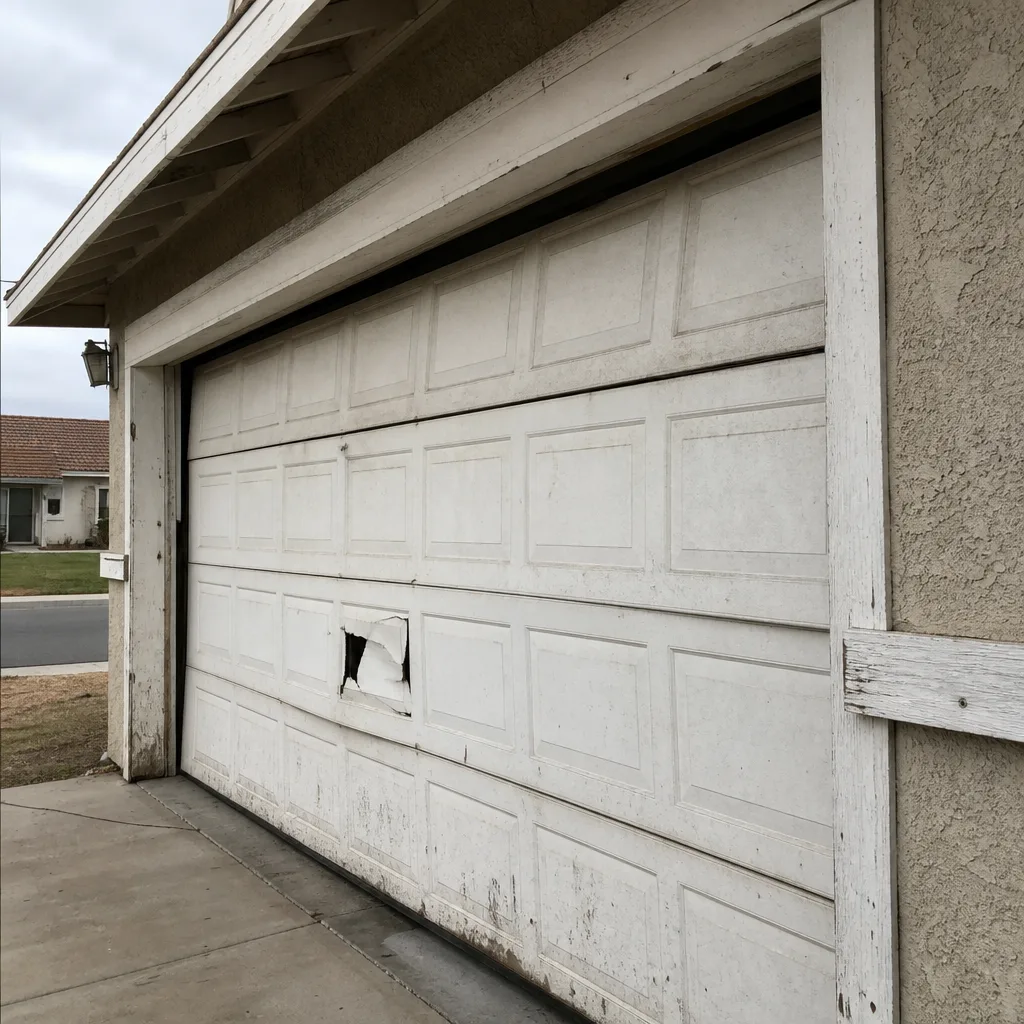 Before
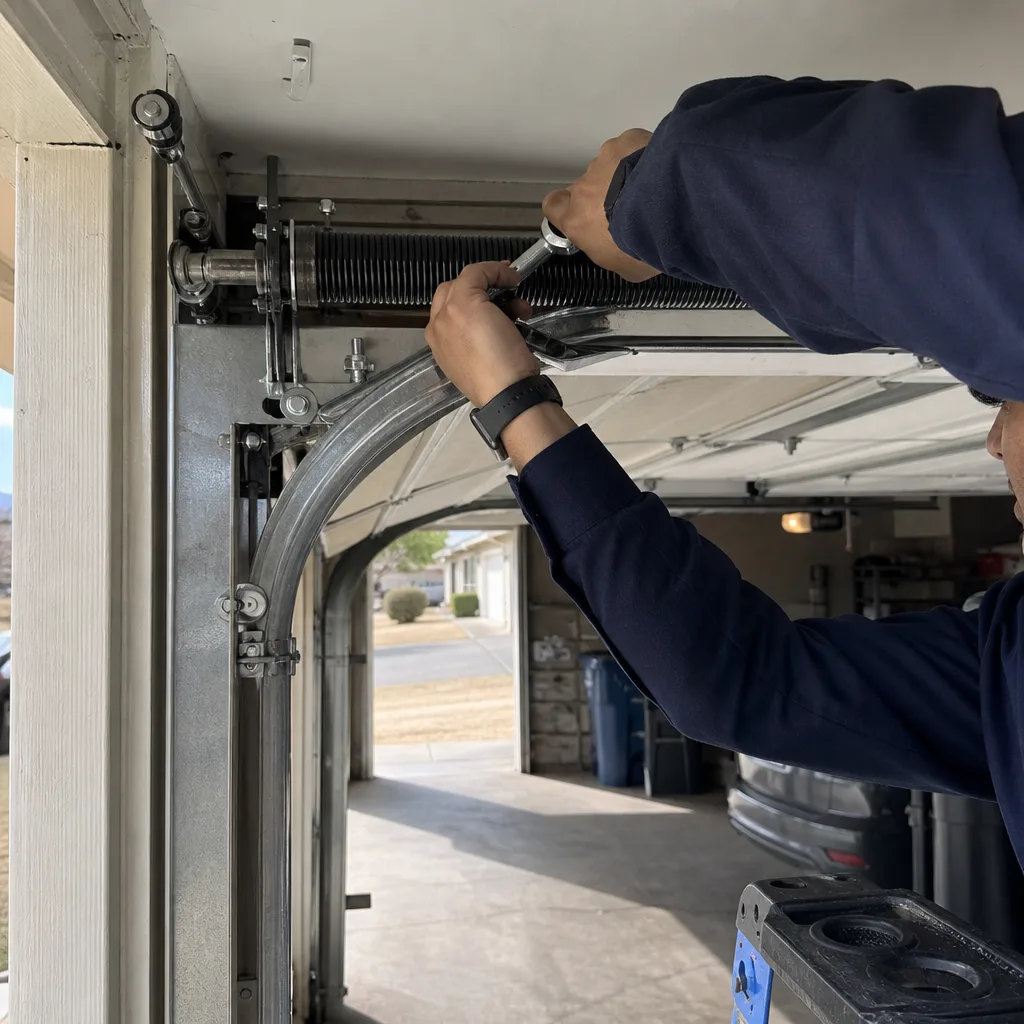 After
After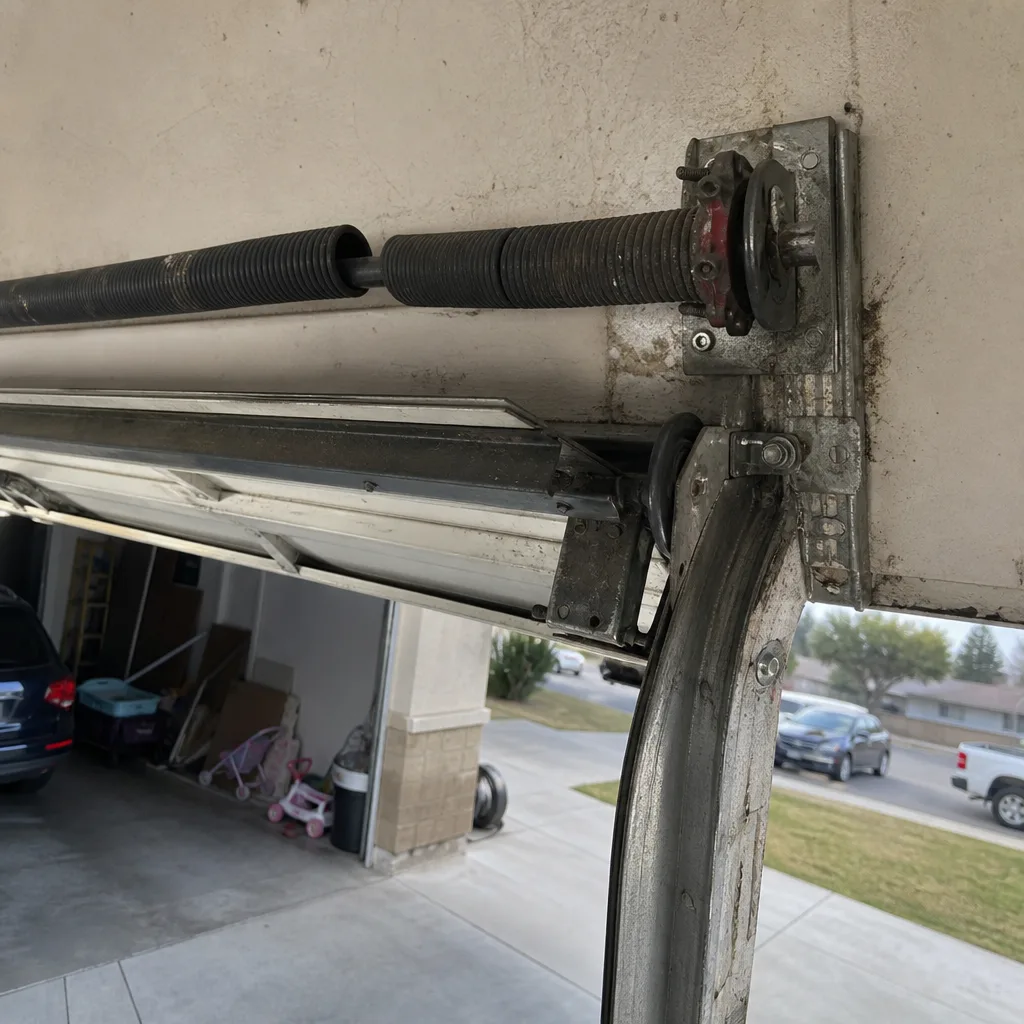 Before
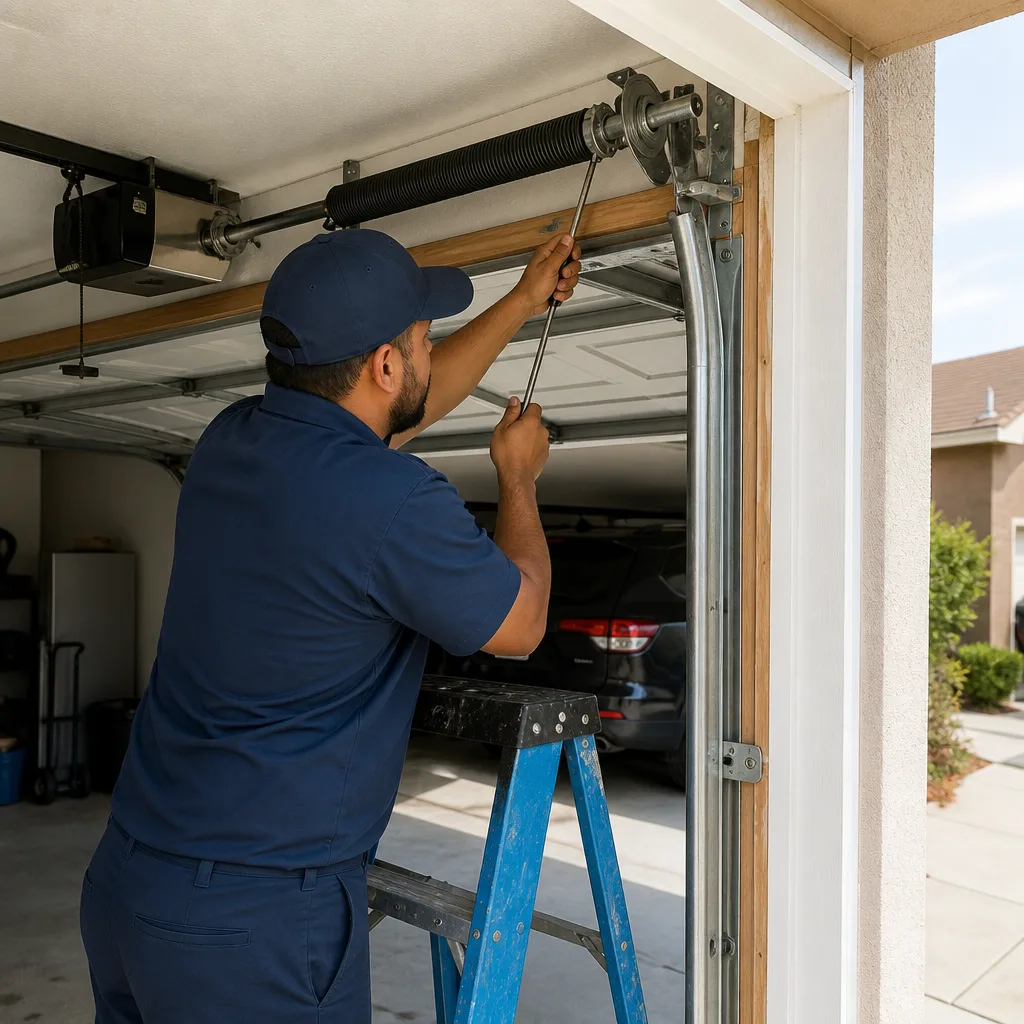 After
AfterSeasonal Garage Door Care for Palmdale: Year-Round Homeowner’s Guide
Palmdale hit 108°F in June 2021 and dropped to 19°F in February 2023. Your garage door hardware didn’t get a memo between those dates. The springs, cables, and seals that handle both extremes are operating in a stress range most garage door components aren’t rated for unless you maintain them on a desert schedule. This guide walks you through exactly what to do, month by month, so your door works the one day you really need it, and so you don’t spend money replacing parts that just needed attention at the right time. For The Complete Guide to Garage Door in Palmdale and more guides & resources, visit our blog. We’ve been fixing doors in this town since 2004, and everything below comes from what we actually see in Palmdale garages.
Quick Answer
Seasonal garage door care in Palmdale means four tasks timed to the desert calendar: lubricate and inspect before summer heat arrives in April-May, watch for heat-related opener and seal failures June through September, audit cables, rollers, and seals for heat damage in October, and prepare for freeze-induced spring and track problems December through February. The one task most homeowners skip is checking the bottom seal against the floor slab, which shifts with Palmdale’s clay soil through summer-to-winter cycles. A properly maintained door gets about 15-20 years of service here; a neglected one usually needs garage door repair in Palmdale by year seven.
Table of Contents
- April & May: Pre-Summer Prep Before the Heat Hits
- June Through September: Heat Wave Monitoring
- October: The Post-Summer Damage Audit
- December Through February: Freeze Response
- The Floor Slab Check Most Guides Skip
- Seasonal Maintenance By Task: A Reference Table
- Common Mistakes to Avoid
- When to Call a Professional
- Frequently Asked Questions
April & May: Pre-Summer Prep Before the Heat Hits
In Palmdale, summer doesn’t creep in. It arrives. By mid-May, afternoon temperatures are already pushing past 90°F, and by June your garage becomes an oven that can hit 110°F or higher inside. That heat does specific things to your door hardware, and April is your window to get ahead of it. Here’s what we do on every pre-summer service call, and what you can do yourself in about thirty minutes.
The most important April task is lubrication, and timing matters more than most people realize. Garage door lubricant needs to be applied when temperatures are moderate, ideally between 60°F and 80°F. Apply it in the heat of July and the carrier evaporates too fast, leaving a gummy residue that collects Palmdale dust and turns into grinding paste. Apply it in January cold and it thickens before it penetrates the hinge pins. April gives you the right window.
Here’s the lubrication routine we recommend for Palmdale homeowners:
- Hinges and rollers: Use a garage-door specific lubricant, not WD-40. WD-40 is a cleaner, not a lubricant for load-bearing parts. Spray the hinge pins and the roller bearings if you have steel rollers. If you have nylon rollers, the bearings are sealed and don’t need lubricant, but the hinge pins still do.
- Torsion springs: Spray along the length of both springs. The coils rub against each other every time the door moves, and lubricant reduces the friction that eats spring life. Do not touch the springs, do not adjust anything, just spray. A door is 200 pounds riding on two springs. Respect it.
- Tracks: Do not lubricate the tracks. The rollers should ride on dry, clean track. If your tracks are greasy, the grease catches dust and becomes a slow, sticky brake. Wipe the inside of the track with a rag instead.
- Opener rail: If you have a screw-drive or chain-drive opener, the rail needs its own lubricant, not the same spray as the hinges. Check your opener manual. A Genie screw-drive and a LiftMaster chain-drive need different products.
While you’re out there, check the weatherstripping and bottom seal. After a Palmdale winter, the bottom seal often shows small cracks from the cold, and those cracks become splits once the first 100°F afternoon hits. If you can fold the seal and see cracking, replace it now before summer turns it brittle. The cost is under $40 and takes about twenty minutes.
One more thing that catches a lot of people off guard: most garage door openers have a heat limit setting. On LiftMaster and Chamberlain models, it’s usually called the “force setting” or “sensitivity” adjustment, and it’s set at the factory for moderate climates. A Palmdale summer makes the door’s metal expand, which adds resistance, and the opener can interpret that resistance as an obstruction and reverse. If your door starts reversing for no apparent reason in early summer, it’s often the force setting, not a broken part. You can check the manual or call us, but don’t just crank the dial yourself, the setting exists to keep the opener from closing on a person or a bicycle.
June Through September: Heat Wave Monitoring
When a door misbehaves during a heat wave, the instinct is to call for repair immediately. Sometimes that’s the right call. Sometimes it’s not. Here’s how to tell the difference before you spend money, and whether DIY vs Professional Garage Door: The Palmdale Homeowner’s Decision Guide can help you choose.
Heat does three specific things to garage door hardware. First, metal expands. The door panels, tracks, and struts all grow slightly, and on a tightly fitted door, that growth can make the door bind. Second, lubricant thins and migrates, so parts that were quiet in May start squeaking in July. Third, the opener’s motor runs hotter, which triggers internal thermal protection on hot afternoons and can cause the opener to stop working mid-cycle until it cools down.
Here’s how to read what you’re seeing:
- Door reverses right after touching the ground: This is usually the bottom seal compressing against a floor slab that has expanded upward in the heat. Wait until evening and try again. If it closes after sunset, the problem is heat, not hardware. But if it gets worse over several weeks, you may need a seal adjustment or the floor slab itself checked.
- Opener stops working at 3 p.m. but works fine at 8 a.m.: That’s thermal overload on the opener motor. The motor has a built-in shutoff to prevent fire, and a 115°F garage is enough to trip it on an older unit. If this happens more than twice in a summer, the opener is struggling and it’s worth a look. A new opener with a DC motor and better cooling is often the fix, and garage door opener service in Palmdale is a straightforward call.
- Squealing or screeching that only appears in hot weather: This is usually the rollers. Steel rollers with worn bearings get louder as the metal expands. If it goes away in the evening, you have a few weeks to replace the rollers before the bearing seizes and the roller starts sliding instead of rolling, which is when you start damaging the track.
- Door jerks or shakes on the way up: That’s a balance issue, and heat can reveal it. The door’s weight doesn’t change, but the spring’s tension does change slightly with temperature, and a door that was marginally balanced in May can be visibly unbalanced in August. This is not something to wait on. An unbalanced door is already stressing the opener and shortening the life of every moving part.
The key is to pay attention to timing and pattern. If the problem only happens during the hottest part of the day and goes away after sunset, it’s probably heat-related and can often be addressed with adjustments rather than replacement. If the problem happens at all temperatures and is getting worse, that’s a mechanical failure in progress. Call before it becomes an emergency.
October: The Post-Summer Damage Audit
October is the month when Palmdale homeowners should crawl back to their garage doors and take a hard look. The summer heat has done its work, and now you get to see what it broke. This is the audit we perform on every October service call, and you can do most of it yourself with a flashlight.
Start with the cables. Lift cables run under constant tension, and summer heat degrades the galvanized coating that protects the steel underneath. In Palmdale, the pattern we see is specific: cables that look fine in June but by October show rust blooms where the cable meets the drum, and those rust blooms are exactly where the cable will eventually snap. If you see rust, your cable replacement window is measured in months, not years. Do not touch a cable under tension. This is a visual inspection only.
Next, check the rollers. Thermal expansion through a Palmdale summer creates a specific problem called flat-spotting. When a steel roller sits in one position inside a hot track, the ball bearings inside can develop microscopic flat spots from the constant pressure. Those flat spots turn into a rumble or a grind when the door moves, and they get worse in cold weather when the metal contracts and the flat spots bind. If your door sounds like it’s rolling on square wheels in October, replace the rollers before winter. It’s one of the cheapest fixes in the garage door world, usually under $150 for a full set, and it saves your track from being chewed up. For a full breakdown of what to budget, see our Garage Door Cost Breakdown: The Palmdale Homeowner’s Reference for 2026.
The bottom seal deserves special attention after a Palmdale summer. Temperatures above 100°F bake the vinyl compounds in most bottom seals, and the visible sign is hardening. A healthy seal should feel pliable, like a truck tire sidewall. An October seal in Palmdale often feels like plastic, and you can see hairline cracks forming at the fold. Once that seal loses its flexibility, it stops conforming to the floor, and that’s when you start getting daylight, dust, and mice under the door. Palmdale has all three.
Finally, run a balance check. Pull the release handle and lift the door manually to waist height. If it stays put, the springs are holding properly. If it drops or climbs, the springs have lost tension through the summer, and an out-of-balance door doubles the workload on your opener. This is a two-minute check that tells you whether your springs need attention before winter arrives.
December Through February: Freeze Response
Palmdale gets cold. Not Chicago cold, but cold enough to break garage door hardware, and the February 2023 freeze that dropped temperatures to 19°F reminded a lot of homeowners of that. The problem with Palmdale cold is that it’s usually a swing, not a steady freeze. Your door hardware goes from a 70°F afternoon to a 25°F night and back, and that thermal cycling is what kills things.
Torsion springs are the big one. A torsion spring is a chunk of steel that stores mechanical energy, and steel gets more brittle as it gets colder. A spring that’s been through ten or fifteen Palmdale summers has already lost some of its strength through heat cycling. Then comes the first cold morning of the year, the metal is cold and stiff, and the door that worked fine in November snaps a spring in December. This is not a fluke. It’s one of the most common calls we get in this town, and it almost always happens on the coldest morning, because that’s when the metal is at its most brittle. If your door won’t open on a cold morning and you hear a bang from the garage, that’s almost certainly a torsion spring, and that is not a DIY job. A door is 200 pounds riding on two springs. Respect it.
Metal contraction in the tracks is the second winter issue. Steel tracks shrink in the cold, and the gap between the rollers and the track changes. If your door has been running on the tight side all summer, winter can make it bind, and the symptom is a door that slows down, groans, and sometimes reverses. The fix is often just a track adjustment, not a new opener, but people commonly misdiagnose this. If the opener is straining, the problem is almost never the opener. It’s almost always the door fighting the track.
The third winter item is the cold-weather opener behavior. Older AC-motor openers are sluggish in cold weather, and the screw-drive units in particular can struggle. If your opener runs slower in January, that’s normal. If it stops working entirely, let it warm up for an hour before you assume it’s dead. But if it’s over fifteen years old and hasn’t been serviced, winter is when old openers retire themselves.
Your winter routine should be simple: after the first hard freeze of the year, run the door once and listen. A healthy door sounds the same in January as it does in October. A door that groans, pops, or shudders on a cold morning is telling you something. Call before you’re parked inside on the coldest day of the year.
The Floor Slab Check Most Guides Skip
Here’s the one thing that shows up in almost zero garage door guides but causes a steady stream of service calls in Palmdale: the interaction between your door’s bottom seal and your garage floor slab. Palmdale sits on clay-heavy soil, and clay soil moves. It swells when it’s wet and shrinks when it’s dry, which means your garage slab is moving slightly with the seasons, and the bottom of your door is fighting that movement.
Here’s what happens. During the dry summer months, the clay soil contracts and the slab can settle a fraction of an inch at the edges. During the wetter winter months, the clay swells and the slab can lift slightly at the corners. The total movement might be only a quarter inch, but a quarter inch is enough to change the contact between the bottom seal and the floor. In October, you might see daylight under one corner. In February, the same corner might be tight against the seal and the door suddenly reverses on closing.
There are two things you can do about this. First, check the seal-to-floor contact in every season. Run the door down and look for gaps along the entire length. A flashlight on the outside at night works best. If you see light under the door, you’re paying to heat and cool the Antelope Valley, and you’re inviting in the dust that Palmdale generates by the ton. Second, if the gap is consistent and you can fit a pencil under the door, look at the bottom seal, not the floor. Seals are replaceable and cheap. If the gap opens and closes with the seasons, the fix is a threshold seal or a wider bottom seal, and those are also cheap compared to the alternative.
Do not try to fix a slab issue with the door’s travel limits. Adjusting the opener’s down travel to force the door into the floor is how you bend door panels and crack hinges. The floor is the floor. The seal is what conforms to it. Keep the seal fresh and the door will close cleanly.
Seasonal Maintenance By Task: A Reference Table
Here’s the whole year condensed into a reference table. Print it, tape it to the wall by the garage light switch, and check the boxes as you go.
| Season | Task | What You’re Looking For | Typical Cost If Found |
|---|---|---|---|
| April-May | Lubricate hinges, springs, rollers | Squeaks, dry hinge pins, dust-caked springs | $0 if you have spray; $10-15 for spray |
| April-May | Check bottom seal for winter cracks | Cracks at fold, brittle texture, daylight showing | $35-60 for new seal |
| April-May | Verify opener force setting | Reverse on closing in early heat | $0 DIY; service call if unsure |
| June-September | Monitor for heat-related reversals | Reversal only on hot afternoons | Sometimes $0; adjustment if needed |
| June-September | Listen for roller flat-spots | Rumble or grind when door moves | $120-180 for roller replacement |
| October | Cable rust inspection | Rust at drum, fraying strands | $150-250 per cable, but get a pro |
| October | Balance check | Door drops or climbs when released | $200-350 for spring replacement if bad |
| December-February | Cold-morning listen | Groaning, popping, shuddering | Varies; call before it fails |
| All year | Floor slab contact check | Light under the door, dust intrusion | $35-80 for threshold or seal |
I count spring cycles the way you count tire miles. I will tell you what’s left on yours. Most torsion springs in Palmdale are rated for 10,000 cycles, which is about 7 to 10 years of normal use. If your springs are beyond that age, every season is the season to plan for replacement, not wait for the snap.
A quick note on brands. In Palmdale garages, we see a lot of LiftMaster and Chamberlain openers, mostly because they’re what the home builders installed, and a fair number of Genie screw-drives in the older neighborhoods near Rancho Vista. For doors, Raynor and Clopay are the common steel-panel brands that stand up reasonably well to the desert sun. The brand matters less than the maintenance schedule. A well-maintained budget door will outlast a neglected premium door every time.
Common Mistakes to Avoid
- Using WD-40 on the whole door. It’s a cleaner and a water displacer, not a garage door lubricant. It strips the good lubricant off your hinges and leaves a film that catches Palmdale dust. Then the dust grinds your hinge pins down like sandpaper.
- Lubricating the track. The rollers ride on dry track. Grease the track and you’ll be cleaning it out with a solvent after a month of Antelope Valley wind. Wipe the track clean and leave it dry.
- Adjusting the opener force setting because you read a forum post. That setting is a safety calibration. If the door is binding, the answer is fixing the bind, not cranking the force until the door drags itself closed. That’s how fingers get broken.
- Waiting to replace a cracked bottom seal. A seal with hairline cracks in October will be split open by January. In the meantime, dust, spiders, and every mouse in the neighborhood have found your garage. Replace it when you first see the cracks.
- Ignoring a noisy door because it still opens. A squeak is a part waiting to seize. A grind is a part eating another part. A bang is a part that already broke. The cheaper the fix, the earlier you catch it.
- Treating Palmdale like a coastal climate. The maintenance schedule that works in Santa Monica will get you in trouble here. Coastal schedules assume mild temperature swings and no freeze. Palmdale has both extremes, and your door feels them even when you don’t.
- Skipping the seasonal door balance check. A door that’s slightly out of balance in April will be badly out of balance by September. That’s six months of unnecessary wear on the opener, and an opener costs more than a spring adjustment.
When to Call a Professional
Some things on a garage door are genuinely dangerous. Torsion springs carry enough tension to seriously injure or kill someone who doesn’t know what they’re doing. Lift cables are the same. If you’re looking at a broken spring, a frayed cable, a door that’s come off its track, or any job that involves releasing or adjusting spring tension, that’s a professional call, not a weekend project.
There are also the jobs that just aren’t worth doing twice. A door that’s binding in the tracks might need a track adjustment, a hinge replacement, or a panel alignment, and misdiagnosing which one means wasting a Saturday and buying the wrong part. If the opener is straining, the problem is almost never the opener. It’s the door fighting the track, and finding the actual cause is faster and cheaper than guessing.
Otto’s Garage Door offers free estimates in Palmdale, calls are answered by a live person 24/7, and the price quoted on the phone is the price at the door. Call (661) 605-7159 if you’re not sure whether it’s a seasonal adjustment or a real repair. The Otto’s Garage Door home services the entire Palmdale area, and the 90-Day Done Right Promise is in writing on every invoice.
Frequently Asked Questions
Twice a year, in April and October, which puts lubrication in the moderate-temperature windows before the heat and cold extremes arrive. Applying lubricant during a Palmdale heat wave or freeze makes it less effective and can leave residue that attracts dust. Two applications a year will typically keep hinges, springs, and rollers running smooth.
That’s usually thermal expansion. The door panels and metal tracks expand in 100°F heat, adding enough resistance to trigger the opener’s obstruction detection, which makes the door reverse. If the door closes normally after sunset, it’s heat-related. If the reversal happens at all temperatures, you have a mechanical issue that needs attention. Call (661) 605-7159 and Otto will quote the job on the call.
Basic seasonal maintenance, including lubrication, inspection, and minor adjustments, typically runs between $80 and $150 in Palmdale depending on the door’s condition and age. Parts like bottom seals, which run $35 to $60, are usually additional if replacement is needed. The price is quoted before any work starts and doesn’t change at the door.
Yes. Torsion springs get more brittle as temperatures drop, and a spring that’s been through years of Palmdale summer heat is already weakened. The combination of cold metal and accumulated heat fatigue is why springs snap on the first freezing morning, often in December or January. A spring that’s past 7 to 10 years old should be replaced proactively, not waited on.
Checking the bottom seal against the garage floor slab. Palmdale’s clay soil expands and contracts with seasonal moisture changes, shifting the slab by a fraction of an inch and changing how the seal contacts the floor. A seal that fit perfectly in summer might leave a gap in winter, letting in dust, cold air, and pests. The fix is usually a fresh or wider seal, not a floor repair.
For Palmdale, we recommend twice a year: one pre-summer inspection in April or May, and one post-summer audit in October. The desert climate’s two extremes each cause distinct types of wear, and a single annual check will miss whichever extreme is six months behind you. A seasonal inspection catches problems when they’re still small and cheap to fix. Call (661) 605-7159 for a free estimate, and the price we quote on the phone is the price you’ll see on the invoice.
If you’re planning a bigger project, our garage door installation services in Palmdale include a free on-site measure and a written price before we order anything.
The Bottom Line
Palmdale doesn’t have four mild seasons. It has two brutal ones and two short windows to fix what the brutal ones broke. The homeowners who stay ahead of their garage doors are the ones who lubricate in April, audit in October, and listen to the door during the first freeze of winter. For more guides & resources on keeping your door running, explore our blog. The homeowners who fall behind are the ones who park in the driveway on a cold morning, waiting for a service truck. Ask anyone on your street. We have been in this county since 2004, and the maintenance schedule in this guide is exactly what we’d give our own neighbors. Because that’s who you are.
Written by Otto Reinhardt, Owner at Otto’s Garage Door, serving Palmdale since 2004.