

Last updated September 10, 2026
Full 25-point door and opener safety check with every visit - springs, cables, rollers, tracks, and your LiftMaster or Chamberlain opener included
You get a price before we start. It does not change when the truck arrives.
 Before
 After
After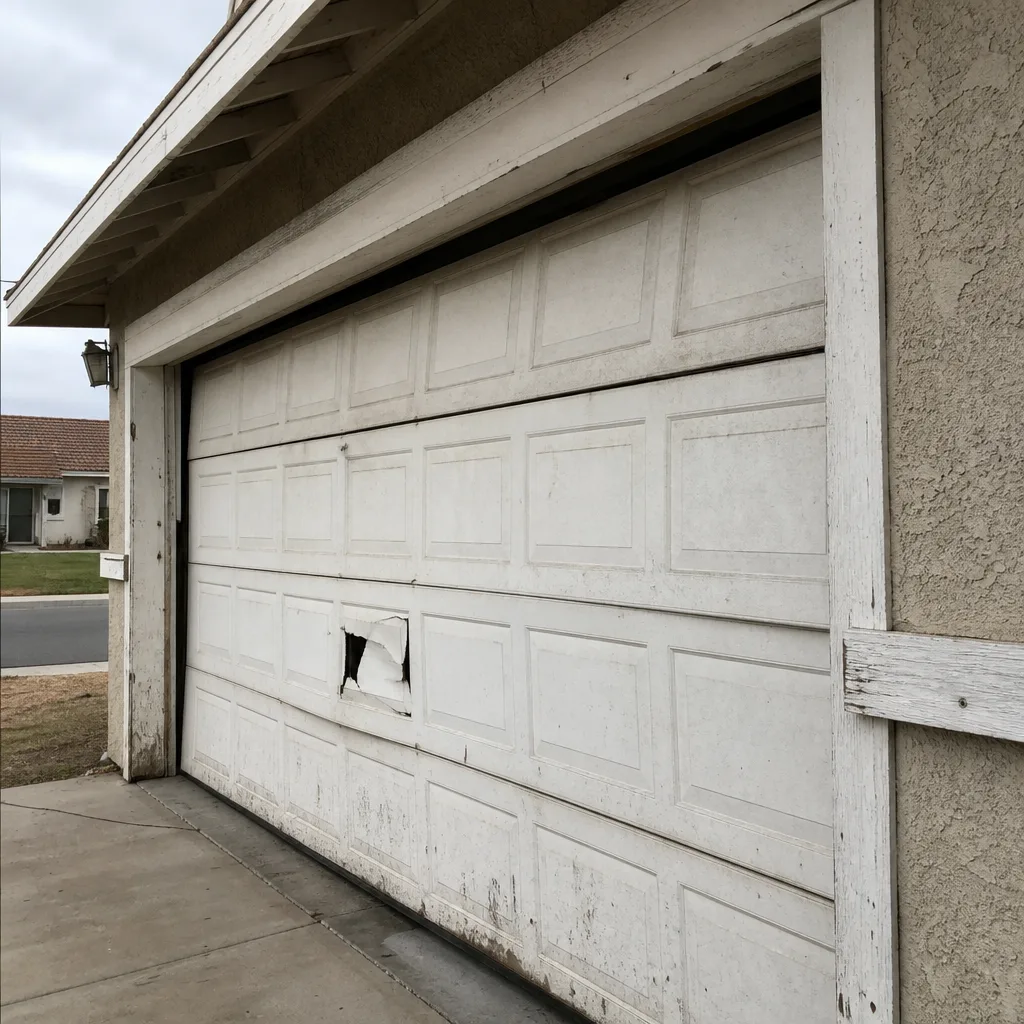 Before
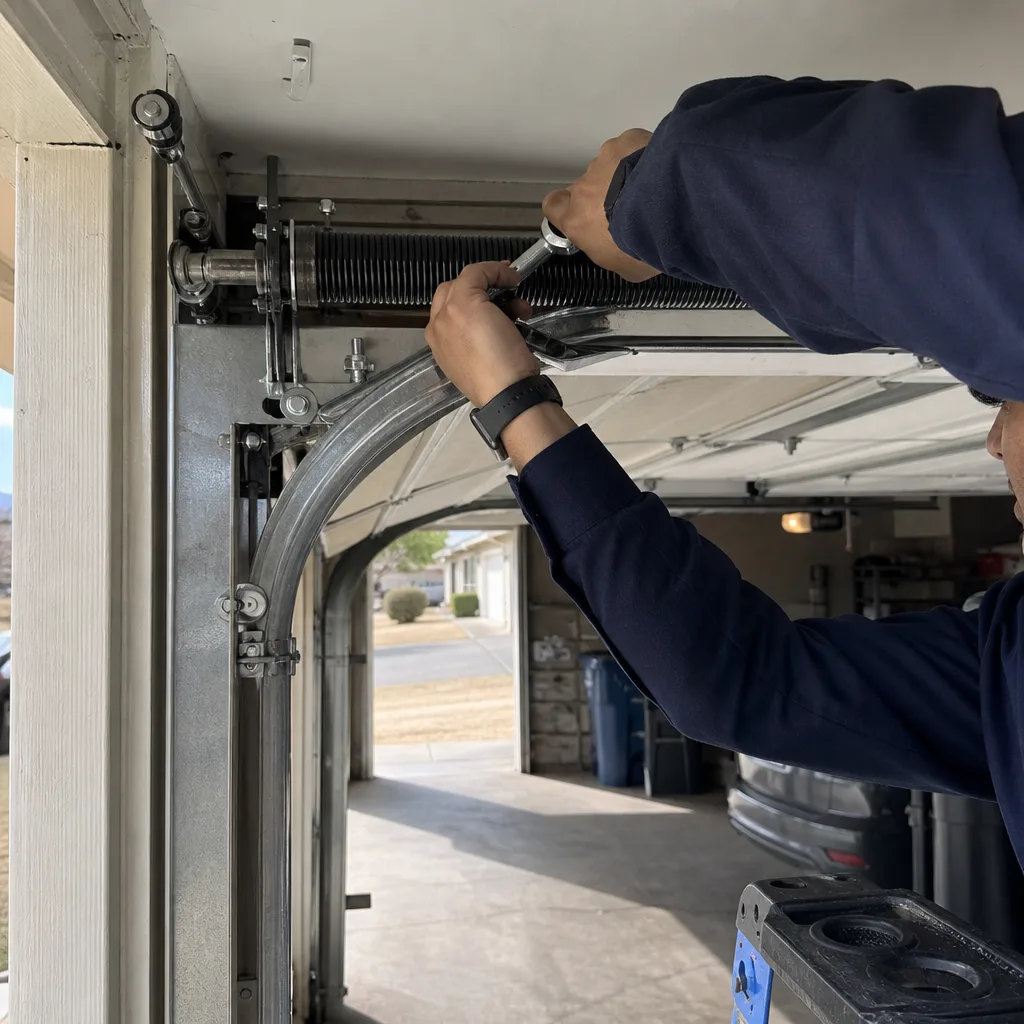 After
After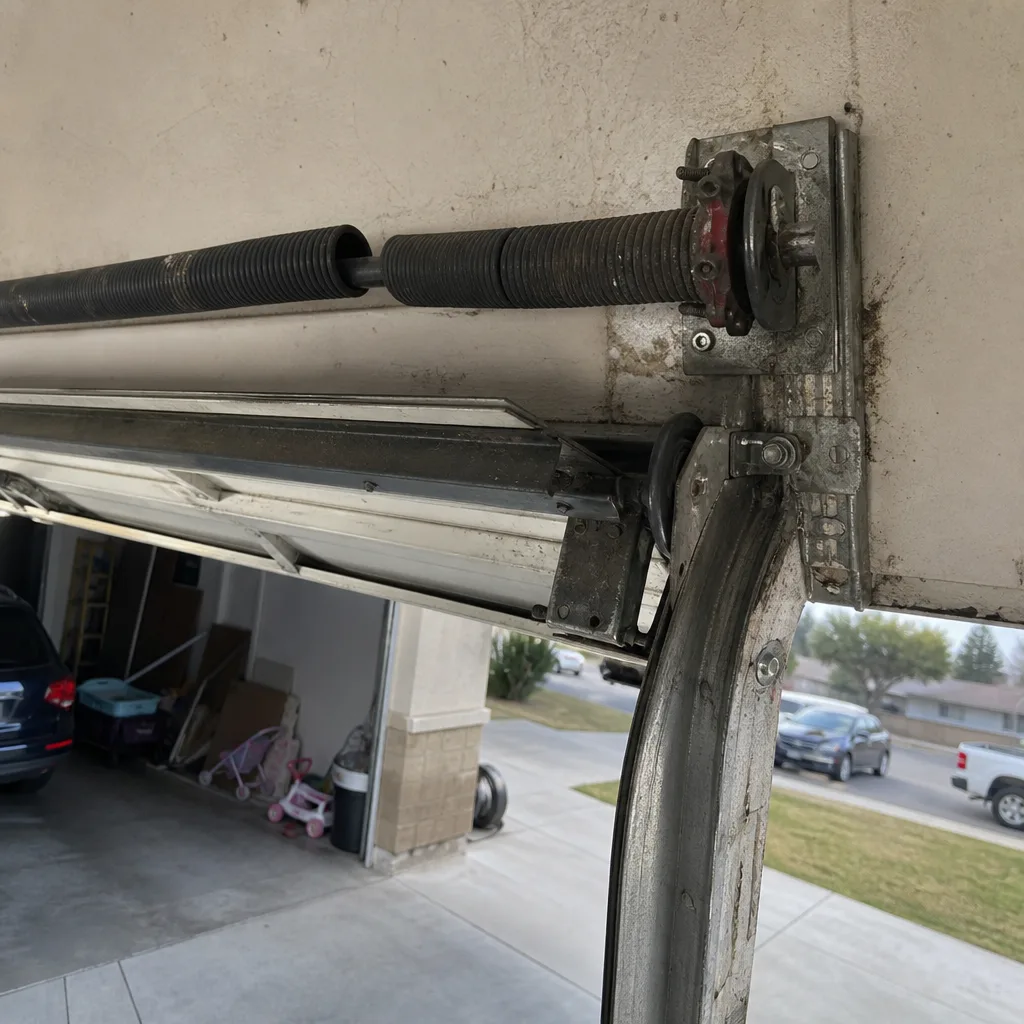 Before
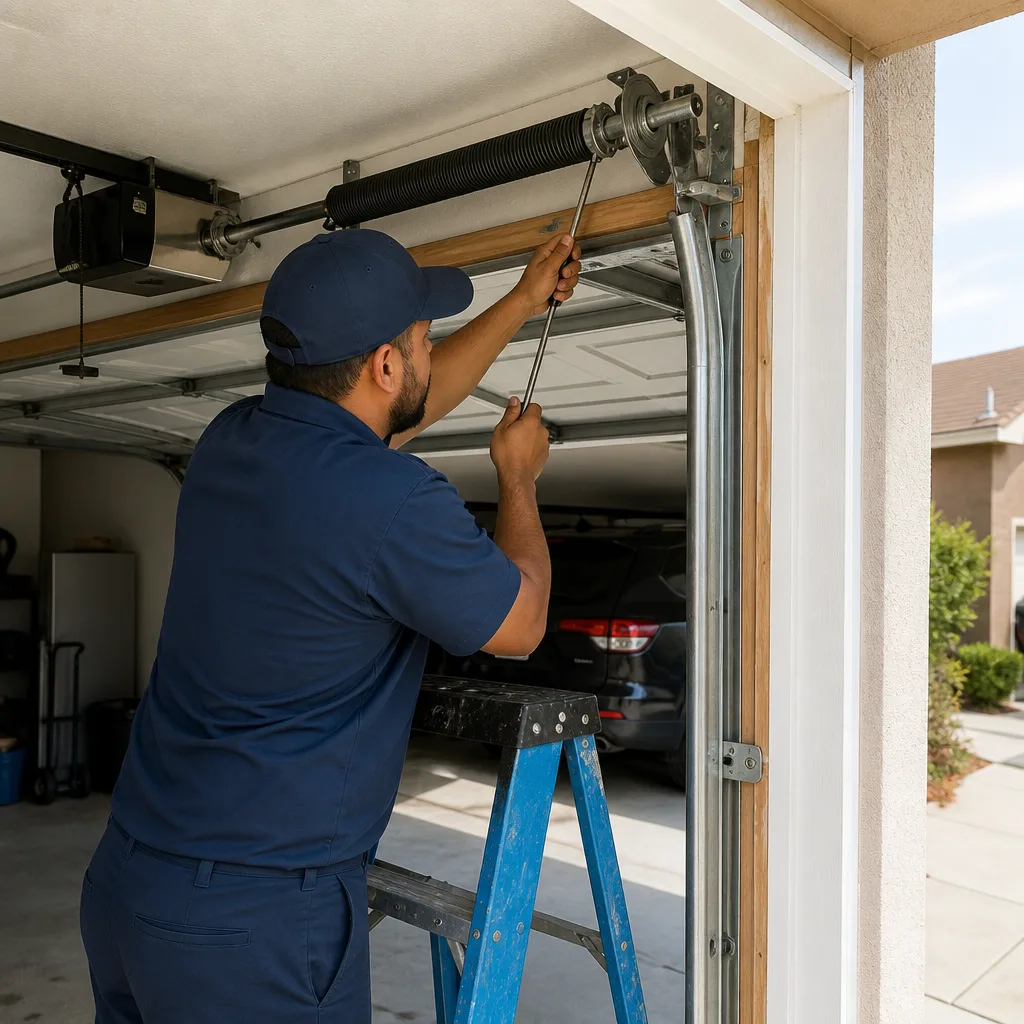 After
AfterGarage Door Repair Maintenance Checklist for Palmdale Homeowners
If you’re lubricating your garage door hinges every six months like the internet says, you’re probably doing it in November and May. That timing works fine in Ohio. In Palmdale, it means you’re rolling into the worst heat window completely dry, because the lube you applied in May baked off by late June and the November coat has been dust for four months. The high desert doesn’t care what a generic checklist tells you to do. It fails components in its own order, on its own schedule. This guide lays out the sequence that actually matters when you live where triple digits are normal and windblown grit finds its way into everything.
Quick Answer
The Palmdale garage door maintenance checklist is a heat-first schedule, not a generic twice-a-year routine. Lubricate and inspect in early March before the heat arrives and again in late September after it breaks. Check the bottom seal, torsion spring grease, and photo-eye alignment every six weeks during summer, because those three components fail first in high-desert conditions. A complete inspection takes about fifteen minutes and catches $80 problems before they become $400 repairs.
Table of Contents
- Why Palmdale Failures Happen in a Different Order
- The Month-by-Month Palmdale Schedule
- The Three Components That Fail First in the High Desert
- How to Check Spring Tension Without Touching the Springs
- What Windblown Grit Does to Nylon vs. Steel Rollers
- The Five-Minute Visual Inspection Otto Runs on Every Door
- Common Mistakes to Avoid
- When to Call a Professional
- Frequently Asked Questions
- The Bottom Line
Why Palmdale Failures Happen in a Different Order
Garage door maintenance guides written for the national audience assume moisture is your enemy. They tell you to watch for rust, check for rot, and lubricate before the rainy season. In Palmdale, we get about seven inches of rain a year. Moisture isn’t the problem. Heat cycling and abrasive grit are. A garage door in Palmdale goes from forty degrees at dawn to a hundred and ten inside an uninsulated garage by mid-afternoon. Metal expands. Rubber dries and cracks. Grease evaporates or turns to paste. The sand and dust that blows down from the foothills gets into the tracks, the rollers, the hinges, and the opener rail. It acts like fine sandpaper on anything that moves. Homeowners who follow a temperate-climate checklist are treating the wrong disease. They’re checking for rust while their bottom seal is crumbling into chunks and their torsion spring grease has turned to brown powder. The sequence matters. Out here, you front-load for heat, not for rain.
The Month-by-Month Palmdale Schedule
Early March: Full Lubrication and Seal Check
This is the single most important maintenance window of the year in Palmdale. March is when you want everything lubricated, adjusted, and sealed before the first real heat wave hits in June. Use a silicone-based lubricant on the rollers, hinges, and springs. Avoid WD-40; it’s a solvent, not a lubricant, and it strips away the good stuff. Inspect the bottom seal carefully. The UV exposure and dry air in Palmdale crack rubber seals faster than anywhere with humidity. If the seal is stiff, cracked, or flattened, replace it now. A failed bottom seal lets in dust, bugs, and in August, an astonishing amount of heat. While you’re down there, check the weather stripping along the sides and top of the door too.
May: Pre-Heat Photo-Eye Alignment
Wait until late May, when the ground has started to settle after winter. Concrete slabs in Palmdale shift with temperature swings, and that movement can knock photo-eye sensors out of alignment. The photo eyes sit about six inches off the ground on either side of the door. If the small light on each sensor isn’t steady, the beam is misaligned and the door will refuse to close, or will reverse when it shouldn’t. A five-minute adjustment with a level and a flathead screwdriver fixes most alignment issues. This is also the month to listen to the door. Run it up and down twice. Any grinding, squealing, or thumping that wasn’t there in March means something is wearing out before the hard season.
June Through August: Monthly Spot Checks
During Palmdale’s triple-digit stretch, do a thirty-second visual check every month. Look at the torsion springs above the closed door. They should have a thin film of lubricant on them. If they look dry or dusty, they need a light coat. Check that the bottom seal is still making full contact with the concrete. In June, door panels and tracks absorb heat and expand. This can cause the door to rub against the track or the opener to strain. If the door hesitates or shudders on the way up, don’t crank the opener force. Call someone who knows what they’re looking at. This is also the season when the grease inside the opener’s rail can liquefy and drip down the track. Wipe it off with a rag. A little drip is normal in extreme heat. A lot of drip means the gear is overheating.
Late September: Post-Summer Recovery
Once the worst heat breaks, give the door a full cycle of maintenance again. Relubricate everything. Inspect the cables for fraying, especially where they wrap around the drum. Check the hinges for cracks. The expansion and contraction of a full Palmdale summer takes a toll on cheap hinges. Tighten all the bolts you can reach with a socket wrench, but do not touch the bolts on the bottom bracket where the cables attach. That bracket is under spring tension even when the door is closed. If anything looks loose there, call a pro. September is also a good time to test the auto-reverse feature. Place a roll of paper towels under the closing door. It should reverse within two seconds of contacting it. If it doesn’t, the door is unsafe.
December: The Freeze Check
Winter in Palmdale brings cold nights, occasional frost, and the kind of temperature swings that snap old springs. Late December is when we see the most spring failures of the year, right behind the June heat spikes. Do a visual check. If a spring has a visible gap in the coil, it’s broken and needs immediate replacement. A broken spring isn’t a maintenance item; it’s a safety emergency. The door’s full weight is hanging on whatever is left. Don’t open the door. Don’t try to raise it manually. Call a Garage Door Repair in Palmdale professional the same day. This is also the month to verify that the opener’s force settings are still correct. Cold air makes rubber stiffer and metal tighter. An opener that was fine in September can struggle in December at twenty-eight degrees.
The Three Components That Fail First in the High Desert
In twenty years of working on garage doors in Palmdale, Otto has found the same three parts fail before anything else. The order is predictable. The bottom seal goes first. The torsion spring grease dries out second. The photo-eye alignment drifts third. If you understand these three, you’ll catch most problems before they strand you with a car stuck in the garage. For the full picture, see our Garage Door Warning Signs: A Palmdale Homeowner’s Reference Guide.
The Bottom Seal
The rubber gasket along the bottom of the door takes the full brunt of Palmdale’s UV radiation and dry heat. It bakes. It shrinks. It cracks. A failed seal is easy to spot: daylight visible under the closed door, dust and leaves accumulating just inside the garage, or a seal that feels hard and brittle when you squeeze it. Replacement seals cost under forty dollars and take about twenty minutes if you know what you’re doing. The signs that a seal is about to fail are less obvious. Look for the rubber pulling away from the aluminum channel it sits in. Look for flattening where the door meets the concrete. If the seal looks more like a ribbon than a tube, it’s already done. The real cost of a failed seal isn’t the seal itself; it’s what happens during a June dust storm when your garage fills with grit that then works its way into the rollers and hinges.
Torsion Spring Grease
The torsion springs above your door work by twisting and untwisting thousands of times. They need a thin coat of grease to keep the coils from grinding against each other. In Palmdale, that grease doesn’t last. The heat breaks it down. The dry air evaporates the volatile compounds. The dust that gets into the garage mixes with whatever’s left and turns it into an abrasive paste. A spring running dry wears its own metal down. It snaps early. The telltale sign is sound. A well-lubricated spring is nearly silent. A dry spring creaks, pops, or makes a low groaning sound when the door moves. If you hear that, the spring is telling you it’s running metal on metal. Lightly grease it with a spring-specific lubricant. If you’re not comfortable doing that, call someone. And never, ever touch a spring under tension to feel if it’s dry. Visual inspection and sound are the only safe tests for a homeowner.
Photo-Eye Alignment
The photo-eye sensors on either side of the door are what prevent it from closing on a child, a pet, or a car. They’re held in place by brackets that get bumped by lawn equipment, bicycles, and the general rumble of daily life. In Palmdale, temperature swings move the concrete slab they’re mounted to just enough to break the beam. The symptom is a door that starts to close and then reverses for no reason, or an opener that blinks its indicator lights and refuses to budge. The fix is usually a simple realignment. Check that both sensors are pointed directly at each other. Check that the small indicator light on each is glowing steadily. A flickering light means the beam is weak. A gentle nudge usually fixes it. If the lights are steady but the door still won’t close, the sensors themselves are dead, and that’s a fifteen-dollar part and a service call.
How to Check Spring Tension Without Touching the Springs
A garage door spring under tension can kill you. Two hundred pounds of door hangs on those coils, and when a spring lets go, it lets go instantly and violently. The good news is you don’t need to touch the springs to know whether they’re doing their job. There’s a safe, three-minute test that tells you everything you need to know.
- Pull the release cord. The red handle hanging from the opener rail disconnects the door from the opener. Pull it while the door is closed.
- Lift the door manually to waist height. A properly tensioned door should lift smoothly with moderate effort and stay exactly where you leave it. It should not shoot up on its own. It should not sag or drop.
- Let go of the door at waist height. If the springs are balanced correctly, the door stays put. It might drift an inch or two, but it shouldn’t fall.
- Lower the door back down. It should lower with controlled resistance, not slam to the ground and not fight you on the way down.
A door that slams shut when you release it means the springs are weak or broken; the door is functionally unmotorized and the opener is doing all the work. An opener running a door with failed springs burns out its motor and gears inside a year. A door that flies up on its own means the springs are over-tensioned, which wears them out early and makes the door dangerous. Neither condition is a DIY fix. Adjusting torsion spring tension requires winding bars, experience, and the knowledge that one slip means a broken wrist or worse. If the tension test fails, call someone who does this every day. A spring adjustment is a fraction of the cost of replacing an opener motor.
What Windblown Grit Does to Nylon vs. Steel Rollers
Palmdale’s grit doesn’t come from rain-washed silt. It comes from windblown dust and sand that scours everything it touches. Your garage door rollers are the component most exposed to this abrasion. They roll inside metal tracks, and every cycle of the door grinds whatever dust has settled in those tracks between the roller and the rail.
Steel rollers are what most builders install. They’re cheap. They work. In a desert climate, the bearings inside steel rollers collect grit and wear out in five to seven years. When a steel bearing starts to go, the roller doesn’t roll; it slides. You can see the flat spot on the wheel if you look closely. A sliding steel roller wears a groove into the track, and eventually the door rides rough, makes noise, and puts stress on the opener. Replacement steel rollers are fine if you’re on a budget and the door sees normal use.
Nylon rollers are what Otto recommends for Palmdale garages. The nylon wheel is quieter and doesn’t grind the track the way steel does. More importantly, good nylon rollers have sealed bearings that keep grit out. They cost more, but in this climate they last nearly twice as long as steel. The tradeoff is that the nylon itself degrades under intense UV exposure over time, though most of that exposure is limited to the rollers on the outside edge of the track. The test is simple: unplug the opener, pull the release cord, and lift the door manually. If the door rolls smoothly and quietly, the rollers are fine. If it feels rough, chatters, or you hear a grinding sound, at least one roller is dead. Count them. Residential doors in Palmdale typically have ten to twelve rollers. If more than two are bad, replace the set. If just one is bad, replace that one and inspect the others.
A full roller replacement on a standard double door takes a pro about an hour. It’s one of the highest-value maintenance items on this list because new rollers take strain off the springs, the hinges, and the opener all at once. If you’re hearing a rhythmic thumping as the door moves, that’s a flat-spotted roller. The fix is cheap now and expensive if you let it groove the track.
The Five-Minute Visual Inspection Otto Runs on Every Door
Before Otto opens his toolbox on any service call in Palmdale, he walks the door once, top to bottom, and looks at five things. Homeowners who learn this inspection catch eighty-dollar problems before they become four-hundred-dollar ones. Here’s the exact sequence:
- The springs. With the door closed, look up. Are both springs intact? A broken spring shows an obvious gap in the coil. Are they clean and lightly lubricated, or dry and caked with dust? Dry springs fail early.
- The cables. The cables run along both sides of the door from the bottom bracket to the drum above. Look for frayed strands, kinks, or any sign the cable is rubbing against the track. A fraying cable is a countdown, not a warning. Call before it snaps.
- The rollers. Look at each roller as it passes through the track. Are they round? Do they roll, or do they slide? A worn roller has a visible flat spot or looks smaller than the others.
- The bottom seal. From inside the garage with the door closed, look for daylight under the door. If you can see light, the seal has failed and needs replacement before the next dust storm.
- The tracks and hinges. Look at the vertical and horizontal tracks. Are they straight? Are the brackets tight? Watch the hinges as the door moves. A cracked hinge shows as a visible split or a door panel that sags on one side.
That’s the whole inspection. Five minutes, no tools, no touching anything dangerous. Do this once a month during summer and once every other month the rest of the year, and you’ll catch most issues before they strand you. Otto has made a career in Otto’s Garage Door home service territory by walking this exact sequence on doors that other companies never looked at until they broke.
Common Mistakes to Avoid
- Lubricating on a generic six-month schedule. In Palmdale, May and November lubrication means your door goes dry in the middle of the June heat wave. Match lubrication to the local calendar, not a national blog.
- Using WD-40 on the springs or rollers. WD-40 is a solvent that strips lubricant. It makes things move for a few days, then leaves them drier than before. Use a silicone or lithium-based garage door lubricant.
- Cranking up the opener force when the door hesitates. A door that shudders or moves slowly in Palmdale’s heat is either dry, misaligned, or unbalanced. Turning up the force hides the symptom and burns out the opener.
- Touching or adjusting torsion springs. The springs hold enormous tension even when the door is closed. Winding bars and proper technique are non-negotiable. This is the one maintenance item that sends DIYers to the ER every year.
- Ignoring a rippling bottom seal because it’s “cosmetic.” In the high desert, a failed seal is an open invitation for windblown dust that grinds down rollers and hinges. It’s the cheapest component to replace and one of the most expensive to ignore.
- Testing the auto-reverse with your hand or a stick. If the door fails to reverse, you’ve just broken whatever you put under it. Use a roll of paper towels. It’s firm enough to trigger the sensor and soft enough to survive the test.
When to Call a Professional
There are jobs on a garage door that a careful homeowner can handle: lubricating hinges, replacing a bottom seal, aligning photo-eye sensors, tightening visible bolts. And there are jobs that will put you in the ER if you get them wrong. Broken springs, frayed cables, bent tracks, and anything involving the bottom bracket are all in the second category. If the door jumps or drops during the tension test, stop and call. If a spring has a visible gap, don’t even open the door; the remaining spring is holding the entire load and could snap at any second. If the door has come off the track, don’t force it back on. The track is under tension and will fight you. Otto’s Garage Door offers free estimates in Palmdale. For more guides & resources, visit our blog. Call (661) 605-7159 and a live person answers, day or night, and holds the quoted price at the door.
Frequently Asked Questions
Lubricate twice a year, but time it for early March and late September, not the generic spring and fall dates. The March application protects the door through the summer heat. The September application prepares it for the winter temperature swings. If you notice the door getting noisy during July or August, give it a light touch-up coat without waiting for the next scheduled date.
A basic maintenance visit in Palmdale, including full lubrication, track and hinge inspection, and photo-eye alignment, typically costs between $89 and $150 depending on the door and what needs adjusting. Parts like bottom seals and rollers add to that. Otto’s Garage Door quotes the full price on the phone before the visit and we never revise it upward at the door. Call (661) 605-7159 for an exact quote, and ask about the $40 off any repair over $200 if something does need fixing.
Yes. If the door won’t close and your car is stuck inside, that’s an emergency. A live person answers the phone 24/7, and Otto runs emergency calls in Palmdale the same day, often within hours. The phone number is (661) 605-7159. The most common reason a door refuses to close in Palmdale is misaligned photo-eye sensors, but if the springs have failed, the door needs professional attention before it’s safe to operate.
No. The price quoted on the phone is the price on the invoice. Otto doesn’t do the bait-and-switch that national outfits pull with a low initial quote and a surprise bill at the door. What he quotes over the phone is what you pay, and it’s written on the invoice before any work begins. If additional parts are needed, he shows you the price before installing them and gets your go-ahead first.
Yes. Otto’s trucks are stocked with common rollers, bottom seals, sensors, hinges, cables, and parts for major brands like LiftMaster, Chamberlain, Genie, and Raynor. In most cases, what the door needs is on the truck when he arrives, so the repair is done in a single visit. If the specific spring or panel isn’t on board, it’s ordered and we schedule the install as soon as it arrives, usually within a few days.
Otto’s Garage Door services all major residential brands, including LiftMaster, Chamberlain, Genie, Raynor, Clopay, Amarr, Wayne Dalton, and Craftsman. We work on doors and openers regardless of who installed them originally. Same for Garage Door Installation in Palmdale jobs; we install what fits your home and budget, not what a franchise tells us to push.
The Bottom Line
Palmdale breaks garage doors differently than the rest of the country, which means maintaining them here demands a schedule that front-loads lubrication and inspection before the heat, not after it. The bottom seal, torsion spring grease, and photo-eye sensors are your three early warning systems. A five-minute monthly inspection catches most problems while they’re still cheap to fix. And when something is dangerous, respect it. Springs and cables kill careless hands. For everything else, there’s a local shop that answers the phone at nine p.m. and honors the quoted price. If your Garage Door Opener in Palmdale is straining, the problem is almost never the opener. Start with the door. Call Otto’s Garage Door at (661) 605-7159 for a free estimate or a free second opinion on any written quote another company gave you.
Written by Otto Reinhardt, Owner at Otto’s Garage Door, serving Palmdale since 2004.