

Last updated September 10, 2026
Full 25-point door and opener safety check with every visit - springs, cables, rollers, tracks, and your LiftMaster or Chamberlain opener included
You get a price before we start. It does not change when the truck arrives.
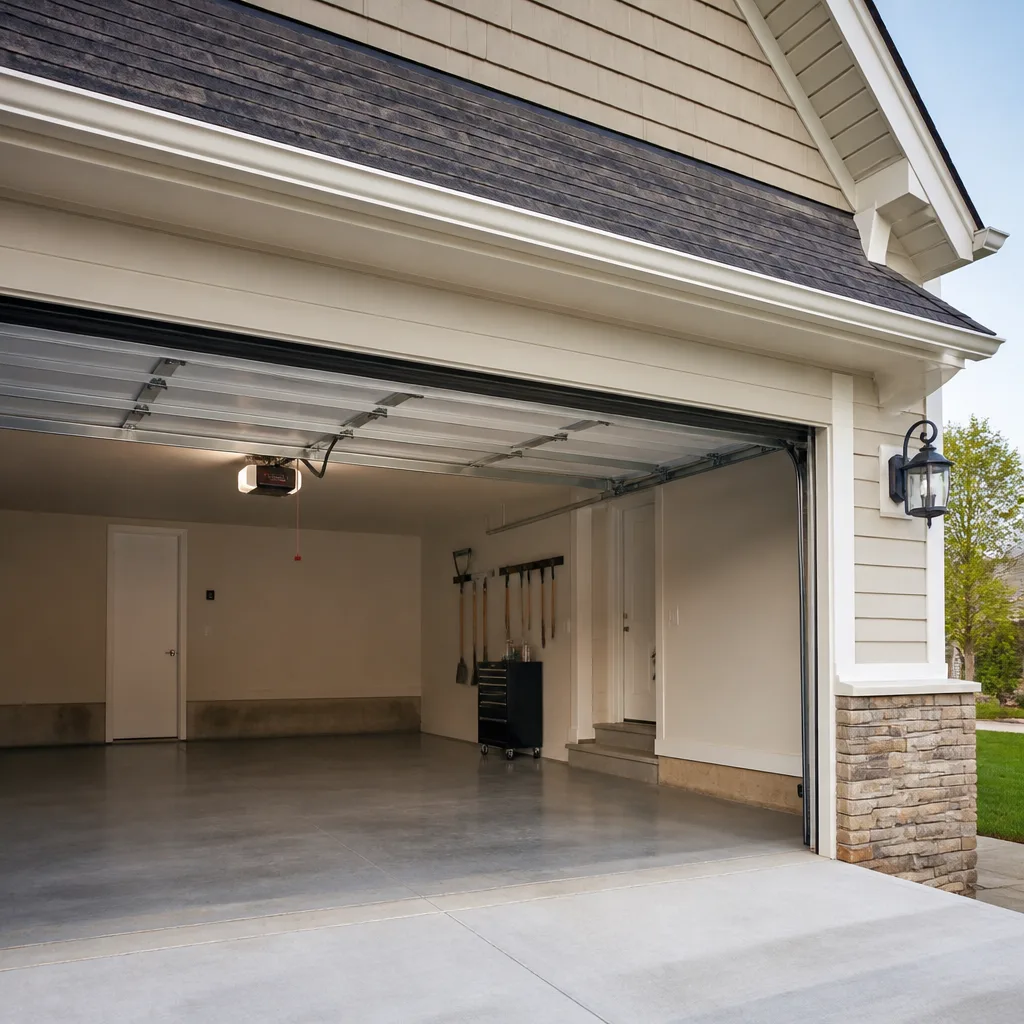
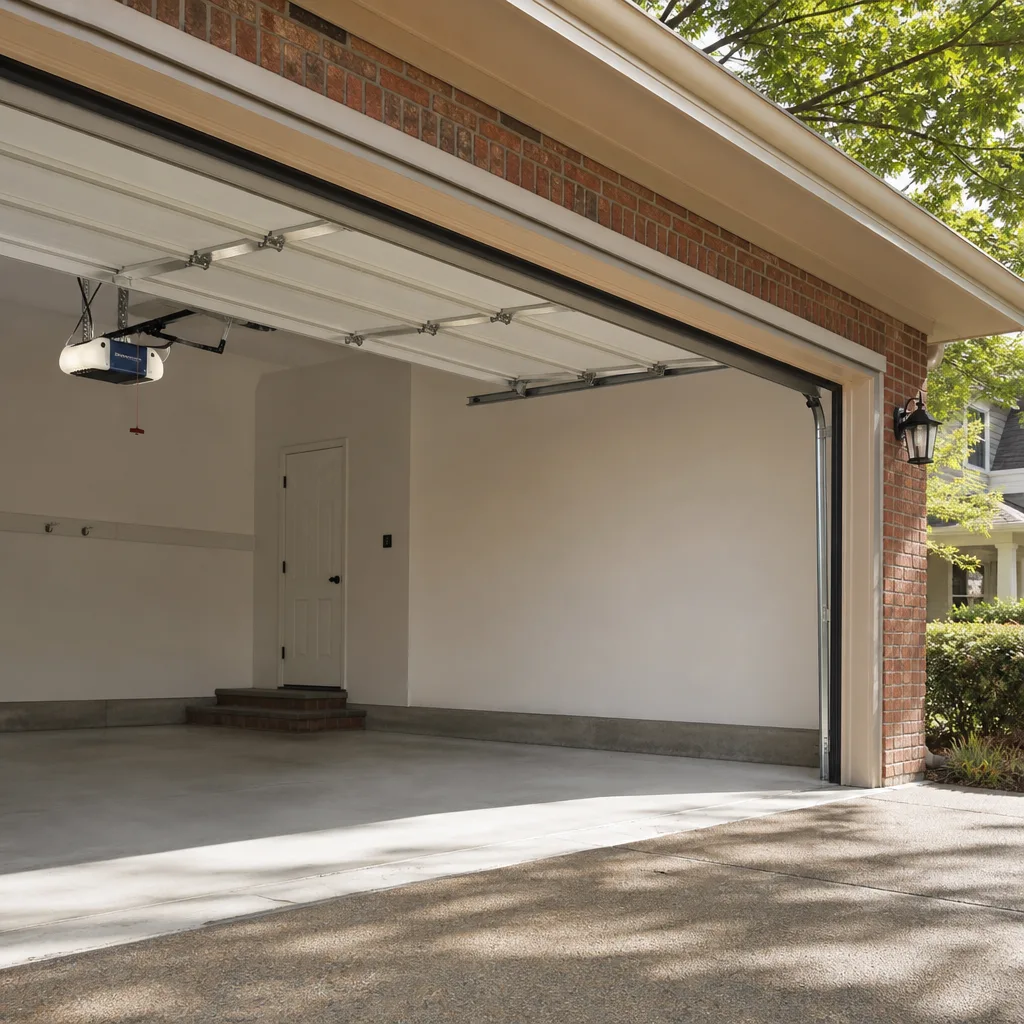
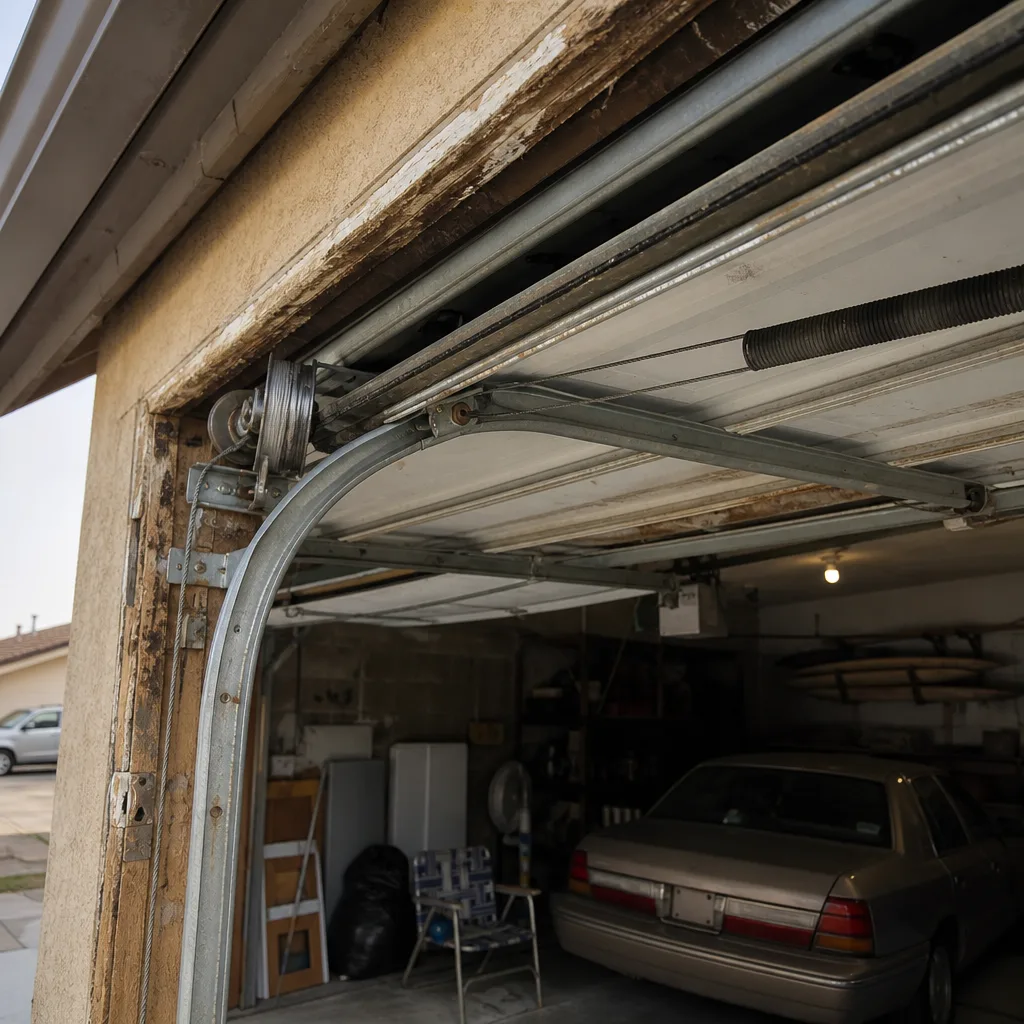 Before
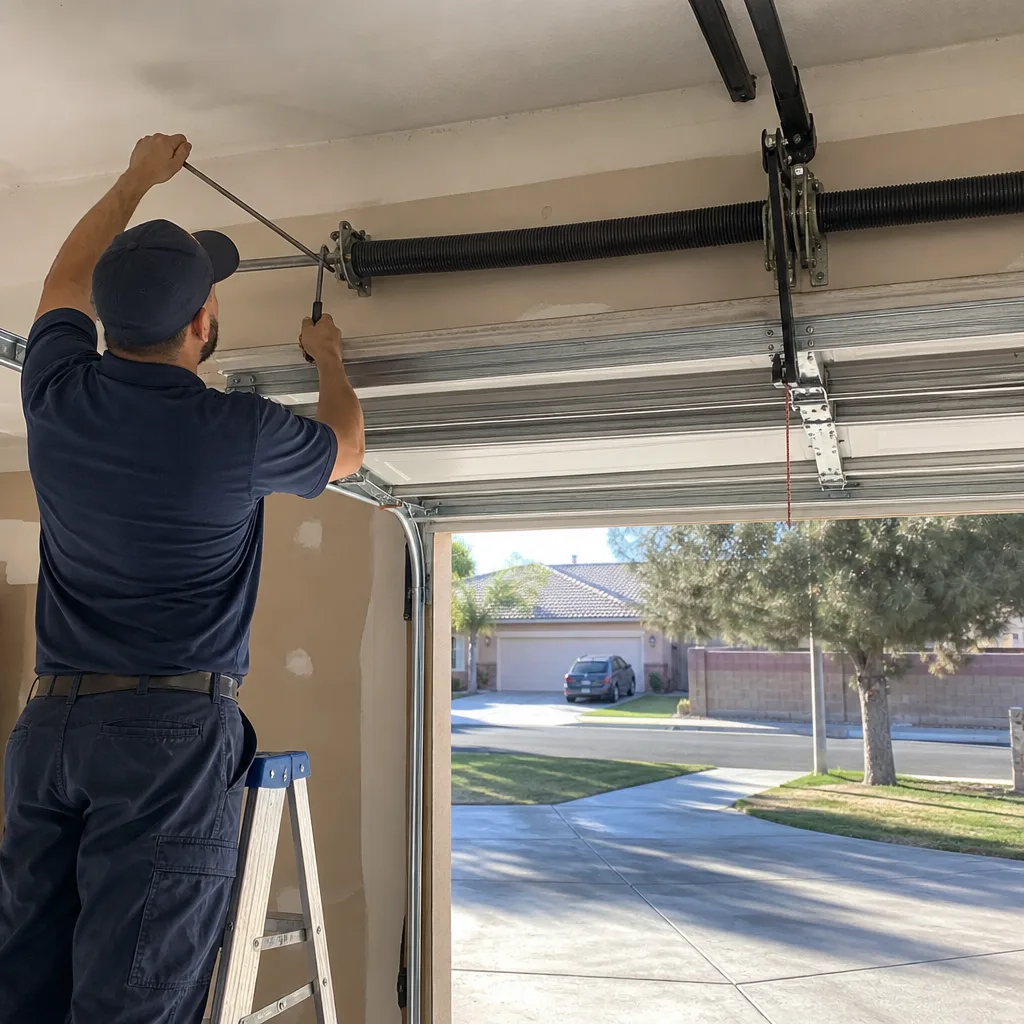 After
After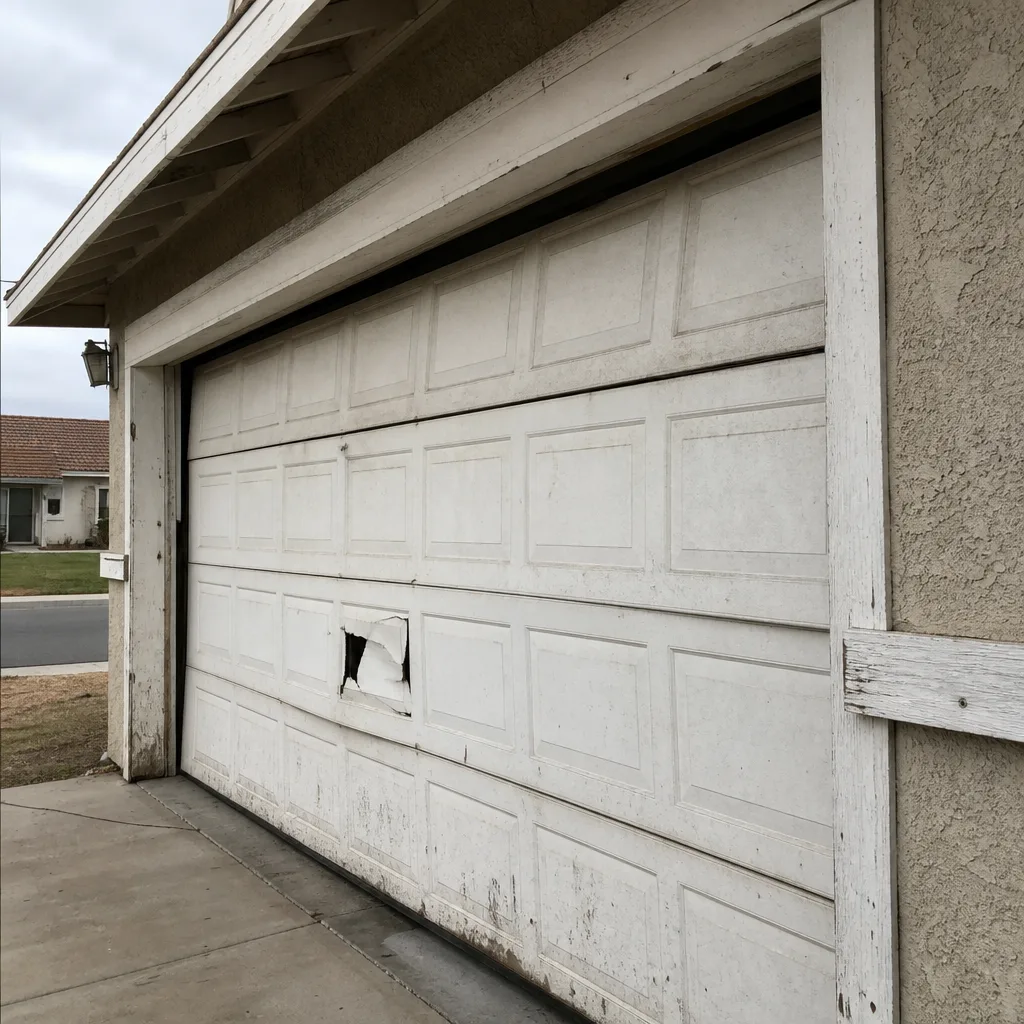 Before
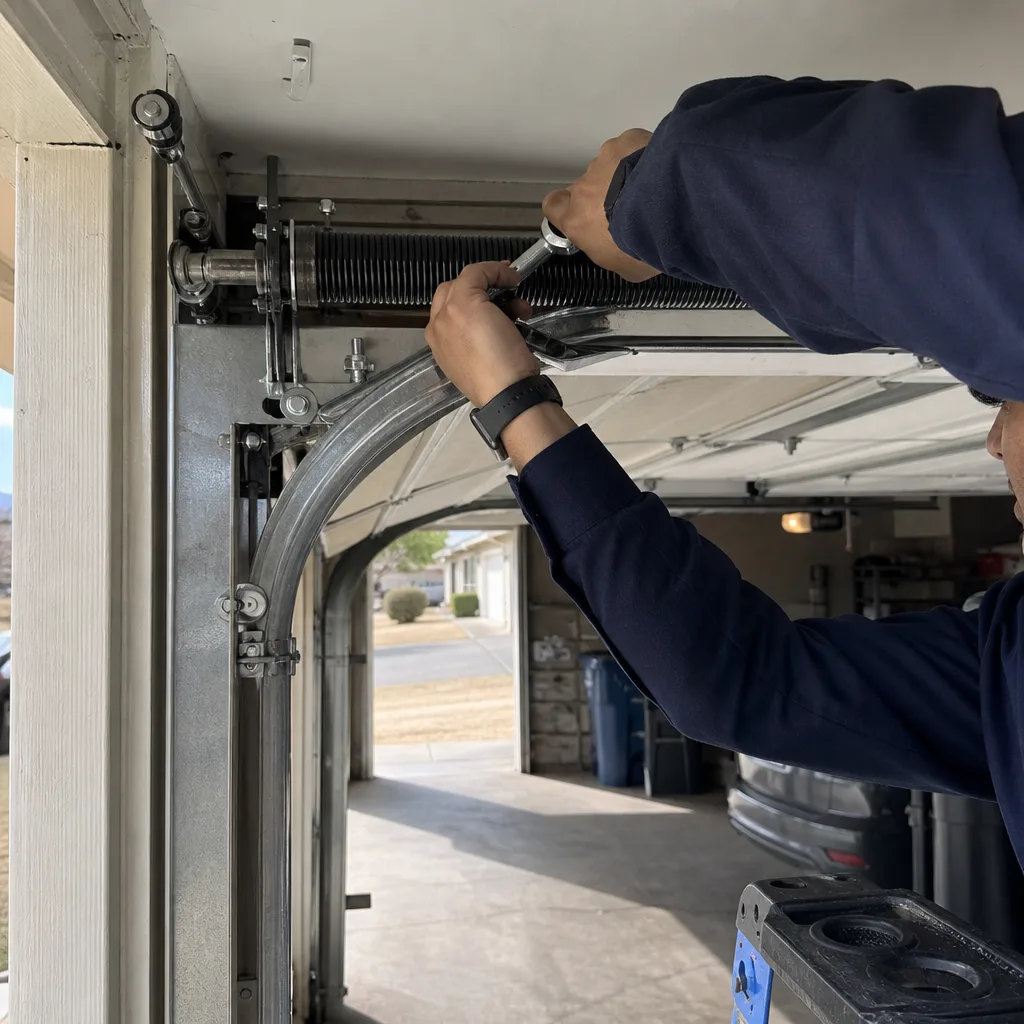 After
After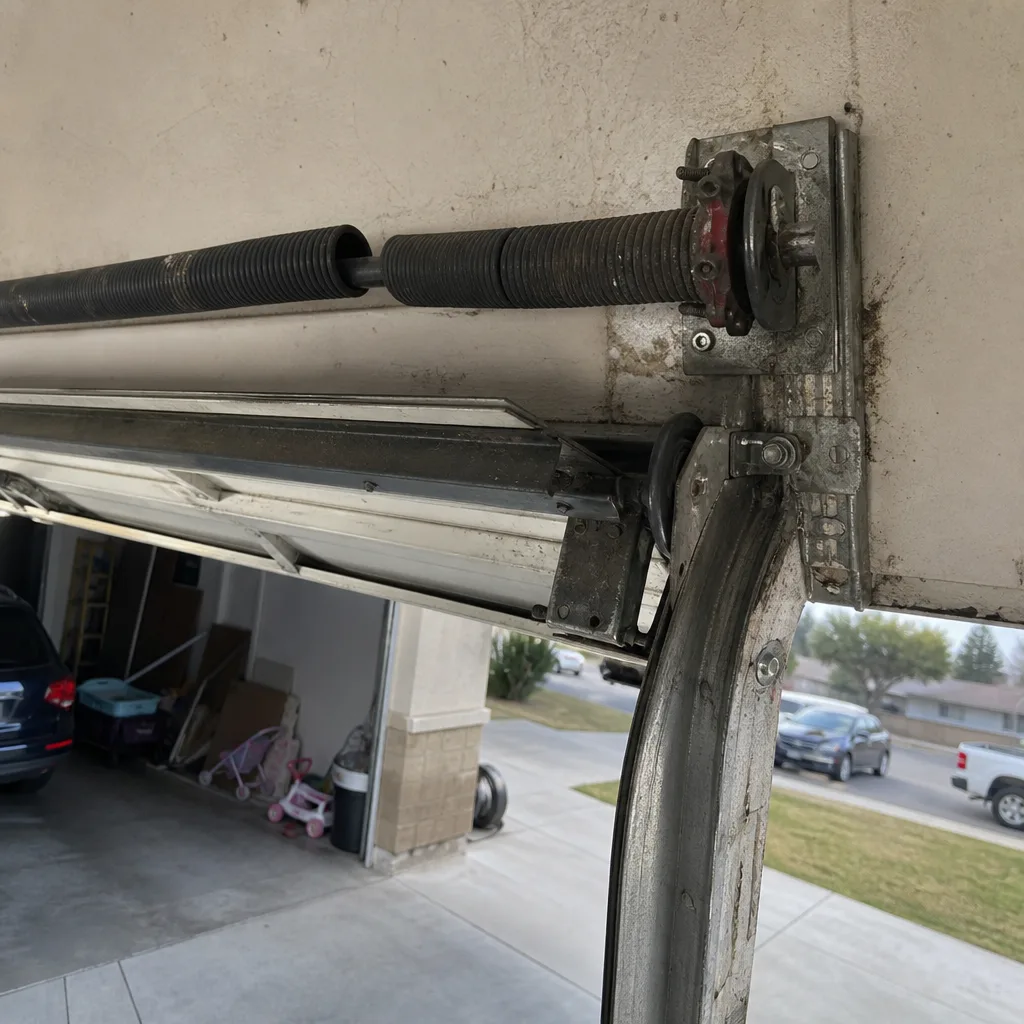 Before
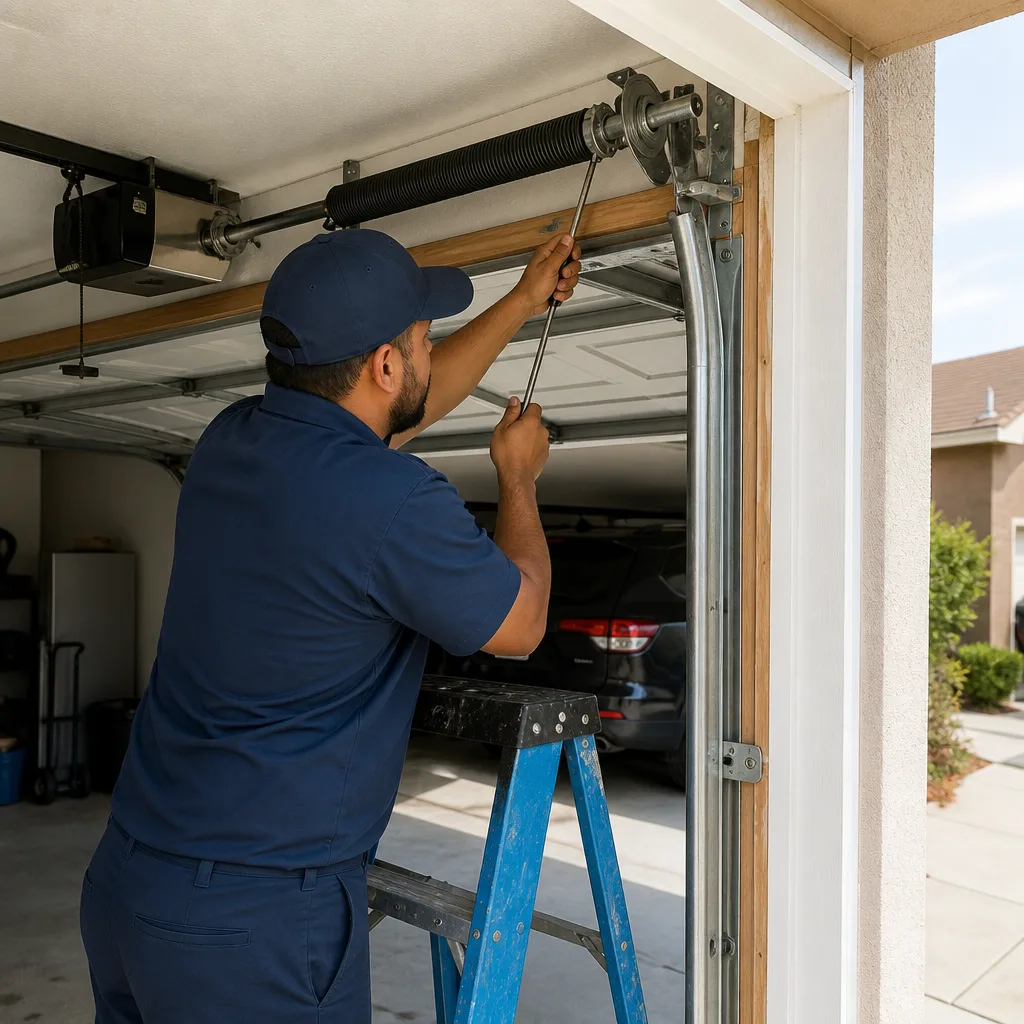 After
AfterGarage Door Permits, Codes & Inspections in CA: What You Need to Know
A homeowner in Palmdale had a new garage door installed without a permit in 2021. It was a big, beautiful upgrade, and the installer told her it was no problem, happened all the time. She listed the house in 2024. The buyer’s inspector flagged the unpermitted work on page three of his report. She had to either pull a retroactive permit, which required opening the drywall around the opening to verify the framing and header, or knock $6,000 off the price. The installer’s phone number was disconnected. This guide explains exactly when California and the City of Palmdale require permits for garage door work, what the code actually says, and what you should do before you sign anything. For Garage Door Warning Signs: A Palmdale Homeowner’s Reference Guide and more guides & resources, read it before you pay for a door, not after.
Quick Answer
In most California cities including Palmdale, a like-for-like garage door replacement that does not alter the opening size, structural framing, or electrical wiring typically does not require a building permit. However, a permit is generally required if you are enlarging or cutting a new opening, changing from a swing door to a roll-up, adding a garage door where none existed, or altering the header, jambs, or supporting structure. The California Building Code (CBC) Chapter 1, Section 105.2 lists work exempt from permits, but local amendments in Palmdale and Los Angeles County can tighten or loosen those exemptions. Always confirm with the Palmdale Building & Safety Division before work begins.
Table of Contents
- When Is a Permit Required in California?
- The Like-for-Like Replacement Rule, Explained
- Palmdale-Specific Permit Requirements
- Wind-Load Engineering in Palmdale
- The Inspection Process: What to Expect
- What Happens When Unpermitted Work Is Discovered
- Resale Risk: Title Insurance and Buyer Demands
- How to Document Compliance Without Insulting Your Contractor
- Common Mistakes to Avoid
- When to Call a Professional
- Frequently Asked Questions
- The Bottom Line
When Is a Permit Required in California?
California’s building code is not a friendly document, but the relevant part for garage doors is surprisingly short. The California Building Code (CBC), which adopts and amends the International Building Code, governs when a construction project needs a permit from the local building official. The core rule is in CBC Chapter 1, Section 105.1: “Any owner or authorized agent who intends to construct, enlarge, alter, repair, move, demolish, or change the occupancy of a building or structure… shall first make application to the building official and obtain the required permit.” That sounds like everything needs a permit. It does not, because Section 105.2 lists exemptions.
Here is what Section 105.2 says applies to garage doors in plain language:
- Replacing a garage door with one of the same size and same operation type is generally exempt. This is the “like-for-like” rule. If the opening does not change, the framing does not change, and the electrical connections (if any) stay the same, a permit is typically not required.
- Resizing or cutting a new opening is never exempt. If you are widening the opening to fit two cars where one was, moving the opening, or adding a door where there was a wall, you need a permit, full stop.
- Changing the door operation type can trigger the permit rule. Swapping a sectional roll-up for a swing-out door, or converting a solid barn door into a roll-up, changes the structural loads on the header and jambs and typically requires a permit and engineering review.
- Adding a new garage door opener often requires an electrical permit because the new circuit or outlet is a wiring change. An existing opener swapped for a new one in the same location, on the same circuit, usually does not.
In our experience serving Palmdale since 2004, the confusion almost always comes from the exceptions. The state code gives a general exemption, but the local jurisdiction can adopt stricter rules. In Los Angeles County, the building department and the City of Palmdale Building & Safety Division enforce their own amendments. A door that is exempt under state code might still need a local sign-off if the city’s adopted ordinance says so. Always confirm with the local office before you write a check.
The Like-for-Like Replacement Rule, Explained
The most common garage door project in Palmdale is a direct replacement. The old steel door is dented, the panels are rusted, or the springs gave out and the homeowner figures it’s time to replace the whole thing. If the new door is the same width, same height, same track style, and same operation type, no permit is required under California law. That is the like-for-like rule, and it covers the majority of replacement jobs.
But the like-for-like rule has teeth. Here is what it actually requires:
- The opening dimensions must be identical. Not “close.” Identical. If you replace a 16-by-7 door with a 16-by-8, you have changed the opening height and therefore the header height. That is a structural change. Permit required.
- The operation type must be the same. Sectional roll-up to sectional roll-up, tilt-up to tilt-up, swing-out to swing-out. Changing the operation type changes how the load transfers to the framing. Permit required.
- The framing beneath cannot be modified. If the old door’s jambs were water-damaged and you replace them, that is a framing repair, not a door replacement. The permit question depends on the extent of the framing work. Replacing a single jamb stud in kind is usually exempt; replacing a header or a beam is not.
- The electrical work, if any, must stay unchanged. If the old door had a hardwired opener and the new one uses the same circuit and same outlet location, that is exempt. Moving the outlet or adding a new circuit for a smarter opener requires an electrical permit.
Here is the part most guides skip: the like-for-like exemption is not a permission slip to skip common sense. A door is a 200-pound assembly riding on two springs. If the existing framing was built for a lighter door, or if the header has sagged over thirty years, slapping a heavier modern door on the same opening without checking the structure is how you get a door that binds, a track that pulls loose, or worse. Otto has seen a door come off its track and land on a hood because the header was not sized for the weight. The code exemption does not override physics. If you have any doubt about the framing, see our Garage Door Repair Maintenance Checklist for Palmdale Homeowners or call a professional who will look before they hang.
Palmdale-Specific Permit Requirements
The City of Palmdale Building & Safety Division enforces the California Building Code with local amendments. Palmdale is in Los Angeles County, which adds its own layer of requirements. Here is what a Palmdale homeowner needs to know that a generic California guide will not tell you:
Palmdale is a high-desert climate with extreme temperature swings. The same door that works fine in Santa Monica will move differently when the overnight low hits 28 degrees in December and the July high hits 105. Wood doors expand and contract, and cheap steel doors with thin insulation will warp. The city’s permit and inspection process is designed to make sure the door is installed to handle that movement. We have seen Palmdale doors installed by out-of-town contractors using coastal installation specs, and the doors bow within two years.
Palmdale requires an inspection for any structural change, even if the permit is over-the-counter. If your project requires a permit, it will require at least one inspection. The city does not rely on contractor self-certification for structural work, even when the contractor is licensed. In practice, the building official’s office will want to see the opening framing before the door goes in, and sometimes after. You can confirm the exact inspection path by calling the Palmdale Building & Safety Division or visiting their office at 38250 Sierra Highway. Here is the phone number for the building department: (661) 605-7159. Have your project address and a description of the work ready.
Plan check is generally not required for a straightforward garage door permit. If you are resizing an opening or adding a door, the city will want a simple plan, usually a dimensioned sketch with the door size, the header size, and the connection details. An engineer’s stamp is not always required for a standard residential door in a standard wall. But if the wall is load-bearing, if the door is wider than 16 feet, or if the site has special wind or seismic conditions, the plan checker may ask for a structural engineer’s letter. That letter costs anywhere from $300 to $900 in the Palmdale area, depending on the engineer.
Property tax assessments can change. Palmdale is in Los Angeles County, where the assessor’s office may re-evaluate the property after a permitted improvement. A new garage door alone rarely triggers a reassessment, but an attached garage addition or a conversion does. We tell Palmdale homeowners to assume the permit will be public record and to ask their contractor whether the work falls under the assessor’s radar before they start.
Wind-Load Engineering in Palmdale
Palmdale sits in a wind zone that most homeowners do not think about until the Santa Anas kick up and the fence starts leaning. The city experiences regular high-wind events, particularly in the fall and early winter when gusts through the Antelope Valley can hit 60 to 80 miles per hour. That fact matters for garage doors because a 16-foot-wide door is a huge sail. Wind pressure builds against the door face and tries to push it inward or pull it outward, and the forces transfer to the tracks, hinges, hinges, and framing.
The California Building Code addresses this in the structural chapters. For residential garage doors, the relevant requirement is that the door must be designed and installed to resist the wind load calculated for the specific site’s wind speed zone and exposure category. In the Antelope Valley, the effective design wind speed is higher than in many parts of Los Angeles County. What does that mean for a Palmdale homeowner? It means the door you buy should have a wind-load certification from the manufacturer, and the installation should follow that certification.
Here is what a compliant wind-load door installation looks like in Palmdale:
- A wind-load rated door. Manufacturers like Clopay, Amarr, and Wayne Dalton produce doors tested for specific wind pressures. You do not need a “hurricane rated” door in Palmdale, but you should not buy a bargain door that has no wind-load documentation at all.
- Reinforced struts. A wind-rated door usually includes additional horizontal supports, called struts, that stiffen the panels. A cheap door may have one strut; a properly specified door for the Antelope Valley may need two or three.
- Heavy-duty track and brackets. The wind rating is only as good as the attachment to the framing. The installer should use track and brackets rated for the same wind pressure as the door.
- Correct fastener schedule. A wind-loaded door needs lag bolts into solid framing, not drywall screws into the jamb. The manufacturer’s installation instructions specify the fastener type, size, and spacing. The inspector will check this if the door is part of a permitted project.
Most replacement doors in Palmdale are installed without a permit and therefore without a wind-load inspection, which is exactly why the like-for-like exemption should not be treated as a free pass on engineering. If your existing door was a lightweight, non-rated model and you are putting in a heavier, better-insulated door, ask the contractor whether the framing can take the added wind load. The answer may be that you need reinforcement, which may bring the project into permit territory. That advice will not come from a contractor whose only goal is to get the door on the wall by noon.
The Inspection Process: What to Expect
If your Palmdale garage door project requires a permit, the inspection process follows a predictable path. Here are the steps, in order, based on how the Palmdale Building & Safety Division handles residential work:
- Pull the permit. The contractor or homeowner files the application, submits a simple plan if required, and pays the permit fee. Palmdale permit fees for a garage door alteration typically range from $150 to $400, depending on the scope. The city will tell you the exact number before you commit.
- Pre-installation inspection. If the opening is resized or new, the inspector needs to see the framing before the door covers it. This inspection verifies the header size, the jamb studs, the hold-downs, and the connection points. Do not let anyone hang the door before this inspection is signed off. We have seen contractors cover an opening before the inspector arrived, and the inspector made them tear out the new drywall to expose the framing.
- Installation. The door goes in according to the approved plan and the manufacturer’s wind-load instructions.
- Final inspection. The inspector verifies the door operation, the safety features (if an opener is involved), and that the installation matches the documented wind-load spec. If everything passes, the city signs the final card, and the permit is closed.
Here is the piece most homeowners do not know: the permit does not end the city’s interest. A closed permit becomes part of the public record for the property. When you sell, the buyer’s agent pulls the permit history, and the unpermitted work question disappears. A property with a clean permit record is worth more at resale than one with a mystery in its past. That alone justifies the permit for any project that requires one.
For a garage door installation in Palmdale, the contractor should be the one pulling the permit, not the homeowner. A licensed contractor is required by law to pull permits for work they perform; they cannot assign that responsibility to the homeowner to avoid liability. If the contractor suggests you pull the permit “to save money,” you are being set up. The contractor is off the hook, and the liability lands on you.
What Happens When Unpermitted Work Is Discovered
Unpermitted garage work does not stay hidden forever. It surfaces at resale, during a refinance, when an insurance claim is filed after a door failure, or when a neighbor complains to the city. Any of those events can trigger a code enforcement review, and then the retroactive permit process begins.
The retroactive permit process in Los Angeles County, which covers Palmdale, is not a slap on the wrist. Here is how it works:
- The violation is identified. An inspector notices the work during an inspection or a complaint is filed. The city may require a permit application be submitted for the work as-built, meaning the work already in place.
- The “as-built” review. The city will not accept a retroactive permit without seeing the work. In the case of a garage door that opened up a wall, the inspector will require the drywall and finish around the opening to be removed to expose the framing. That is exactly what happened to the Palmdale homeowner in the opening story. The new door was beautiful. The inspector still made her open the wall.
- The inspection fails or passes. If the framing is undersized, the retroactive permit will require a fix: a new header, new jamb studs, hold-downs, an engineer’s letter, the works. If it passes, the permit is issued and closed, and the violation is cleared.
- The cost lands on the current owner. The installer who did the work without a permit is long gone, or if they are still around, they have no obligation to fix the problem. The homeowner pays. The retroactive permit, the repair work, and the inspection usually total $2,000 to $8,000 in the Palmdale market, depending on what needs to be exposed and corrected.
The Palmdale homeowner in the opening story had to choose between opening the wall and fixing the framing, or dropping the price. She dropped the price. The buyer got the house for $6,000 less and inherited the unpermitted work. That is a transfer of liability from the seller to the buyer, and no one wins except the buyer’s agent, who used the unpermitted work as a negotiation chip.
Resale Risk: Title Insurance and Buyer Demands
Unpermitted garage door work has a specific impact on resale value and title insurance that most Palmdale homeowners do not learn about until closing is a week away. Here is what happens when the buyer’s inspector or appraiser spots the work:
Title insurance does not cover unpermitted work. A standard title policy insures the buyer against undisclosed liens, encumbrances, and defects in the title, not against code violations or unpermitted construction. If the buyer discovers after closing that the garage door was installed without a permit and the city issues a corrected order, the title company will not pay. The buyer’s only recourse is a lawsuit against the seller for failing to disclose a material fact on the transfer disclosure statement. The seller’s defense is weak if the contractor was hired and the seller signed the check without asking for the permit.
Buyer inspection contingencies are the trigger. In a typical California residential purchase, the buyer has a 17-day inspection contingency period. The buyer’s inspector will note any visible sign of non-conforming work: a door that is larger than the opening originally was, fresh stucco patches around the perimeter, a header that looks undersized. The inspector will recommend verification. The buyer will then demand one of three things: a retroactive permit before closing, a price reduction to cover the risk, or a credit at closing. All three cost the seller.
Lenders will not lend on a property with an open building violation. If the city has already flagged the unpermitted work, the lender will refuse to fund the loan until the violation is cleared. That can delay closing by weeks or kill the deal entirely. Even without an open violation, an appraiser who notes the work may flag it in the report, and the underwriter may condition the loan on the permit being resolved.
The resale risk is not hypothetical. We have talked to Palmdale homeowners who sold a house with an unpermitted garage conversion that cost them $20,000 in credits or retroactive work. A door replacement is a smaller version of the same problem. The lesson is simple: if the work requires a permit, get the permit. The cost is a few hundred dollars and a few weeks. The alternative is a negotiation you will lose.
How to Document Compliance Without Insulting Your Contractor
Most Palmdale homeowners do not want to insult a contractor by asking “show me your permit.” It feels like an accusation. It is not. A reputable contractor expects the question and answers it in under a minute. A contractor who bristles is giving you information too. For help vetting pros, see How to Hire a Garage Door Contractor in Palmdale: A Step-by-Step Guide.
Here is how to ask so the conversation stays friendly and productive:
- Ask in the quoting stage, not after the work starts. The moment the contractor hands you the written estimate, say: “Is the work going to need a permit with the city, and if so, does your price include pulling it?” This is not an accusation. It is a normal, professional question that every legitimate contractor has answered hundreds of times.
- Ask for the California Contractors State License Board (CSLB) verification. The contractor should be able to give you their license number on request. You can look it up on the CSLB website using the license number. Otto’s Garage Door’s license number is published and available before the truck arrives because a homeowner has the right to know who they are letting onto the property.
- Request written confirmation of the permit exemption. If the contractor says no permit is required because it is a like-for-like replacement, ask them to put that on the estimate. The sentence should look like this: “No building permit required per California Building Code Section 105.2, like-for-like replacement, no structural or electrical changes.” A real contractor will write that sentence without blinking. A contractor who refuses is telling you they do not want a paper trail.
- Ask for the wind-load documentation. In Palmdale, ask: “Is this door rated for the wind load in this area?” The contractor should be able to show you the manufacturer’s wind-load certification for the specific door model. Brands like Amarr and Clopay publish this information for every door they make. If the answer is “don’t worry about it,” worry about it.
- Ask who will be at the inspection. If the project requires a permit, the contractor, not the homeowner, should be present at inspection. The contractor pays the reinspection fee if the work fails. The contractor answers the inspector’s questions. You stand there and learn.
A reputable Palmdale contractor will hand you most of this without being asked. You should not have to request the license number, the permit determination, or the wind-load documentation. Those should be in the folder with the estimate. If they are not, ask. If the answer is anything other than “here it is,” find another contractor.
Common Mistakes to Avoid
- Signing a contract that says “permits are the homeowner’s responsibility.” A licensed California contractor is required to pull permits for work they perform. If the contract shifts that burden to you, the contractor is either unlicensed or trying to dodge liability. Either way, you walk away.
- Believing the like-for-like exemption covers an opener install. Running a new circuit or moving an outlet for a new opener is electrical work, and electrical work requires a permit. Swapping the opener in place on the same circuit is fine. The distinction matters.
- Paying the full invoice before the final inspection passes. If the project requires a permit, the job is not done until the city signs off. Hold the final payment until the inspection is passed and the permit is closed. A legitimate contractor will agree to this before work starts.
- Buying the cheapest door online without checking the wind rating. Palmdale’s wind is real. A door without wind-load documentation may fail in a Santa Ana event and propel itself into the street or into your car. The savings disappear the first time the door folds.
- Covering the opening before the inspector sees the framing. If you are doing a permitted resizing, do not let the contractor seal the wall until the pre-installation inspection is signed off. If they do, the inspector will make you open it back up, and the drywall repair is on you.
- Assuming the contractor’s license is current. A license number on a business card means nothing if it is expired, suspended, or belongs to someone else. Check the CSLB website. It takes three minutes. It is the difference between a licensed pro and a person with a truck and a magnet.
- Trusting a verbal promise that “it will pass.” If the work requires a permit, get the permit. If the contractor says “don’t worry, the city will never know,” you have just been told the contractor will cut corners. The city will eventually know, and when they do, the letter comes to you, not to the contractor.
When to Call a Professional
Permits and code are not the place to learn by trial and error. Call a professional when the project involves any structural change, any new electrical work, any wind-load questions, or any uncertainty about whether the like-for-like rule applies. The cost of a professional assessment is a tiny fraction of a retroactive permit, a failed inspection, or a resale negotiation. If you are not sure whether your project needs a permit, the fastest path to a straight answer is to call the Palmdale Building & Safety Division or a licensed local contractor who deals with the city every week. Otto’s Garage Door offers free estimates in Palmdale, and Otto will tell you up front whether your project falls under the permit requirement or the like-for-like exemption. Call (661) 605-7159 and ask, or browse our more guides & resources. The answer costs nothing.
Frequently Asked Questions
If the replacement door is the same size, same operation type, and uses the same framing and electrical connections, no permit is required under the like-for-like exemption in the California Building Code Section 105.2. If the opening size changes, the door type changes, the framing is altered, or new electrical work is added, a permit is required. Confirm with the Palmdale Building & Safety Division before work begins. Call (661) 605-7159 for a free assessment from Otto’s Garage Door, and we will tell you exactly which category your project falls into.
A Palmdale garage door permit for a structural alteration typically costs between $150 and $400, depending on the scope and whether a plan check is required. The exact fee is set by the city’s fee schedule, which changes periodically. If an engineer’s letter is required for the wind-load or structural review, that adds $300 to $900. Call the Palmdale Building & Safety Division for the current fee, or ask your contractor to include the permit fee in the written estimate. We quote the permit cost up front so there are no surprises at the counter.
Palmdale is in a high-wind region, and the California Building Code requires garage doors to resist the design wind pressure for the site’s wind speed zone and exposure category. A compliant door will have a manufacturer’s wind-load certification from a brand like Clopay, Amarr, or Wayne Dalton, and the installation will include the reinforced struts, heavy-duty track, and fastener schedule specified in that certification. A standard cheap door without documentation is not a good bet in the Antelope Valley. We can show you the wind-load paperwork for any door before you buy.
You can sell it, but the unpermitted work will likely become a negotiation issue. A buyer’s inspector will flag visible signs of the work, and the buyer will demand a retroactive permit, a price reduction, or a closing credit. Title insurance does not cover unpermitted construction, so the buyer’s protection is limited to the disclosure process. In Palmdale, unpermitted garage work typically costs sellers $2,000 to $8,000 in retroactive fixes or credits. The cleanest fix is to pull the permit before you list the house. Otto’s Garage Door can assess the work and tell you what the city will want to see.
The inspector will require a retroactive permit application for the work as-built, which means the work is reviewed in its current, completed state. The inspector may require the drywall or covering around the opening to be removed so the framing can be inspected. If the framing or installation is deficient, a fix will be required before the permit is closed. If the work is sound, the permit is issued and the violation is cleared. The process and any corrective work are paid for by the current property owner, not by the original installer.
Ask for a copy of the permit and the permit number. A real Palmdale contractor will give you both and will list the permit number on the invoice. You can confirm the permit status by calling the Palmdale Building & Safety Division and providing the permit number. If the contractor cannot produce a permit number or says “it’s in process” without a number, the permit has probably not been pulled. Ensure the permit is issued before work begins, not after the door is already on the wall.
The Bottom Line
Garage door permits in California and Palmdale are not complicated once you know the rules. A like-for-like replacement of the same size and type needs no permit. Anything structural, electrical, or size-changing does, and the wind-load requirements in the Antelope Valley mean the “same size” rule still requires a properly rated door. The real risk is not the permit itself. It is the unpermitted work surfacing at resale, when the buyer uses it against you and the installer is long gone. Ask your contractor for the license number, the permit determination, and the wind-load documentation before you sign. Get the permit if the work requires one. Hold the final payment until the inspection passes. And if anything about the project is unclear, call Otto’s Garage Door at (661) 605-7159 for a free estimate and a straight answer. Otto has been serving Palmdale since 2004 and will tell you the truth, even when it is not what you wanted to hear.
Written by Otto Reinhardt, Owner at Otto’s Garage Door, serving Palmdale since 2004.