

Last updated September 10, 2026
Full 25-point door and opener safety check with every visit - springs, cables, rollers, tracks, and your LiftMaster or Chamberlain opener included
You get a price before we start. It does not change when the truck arrives.
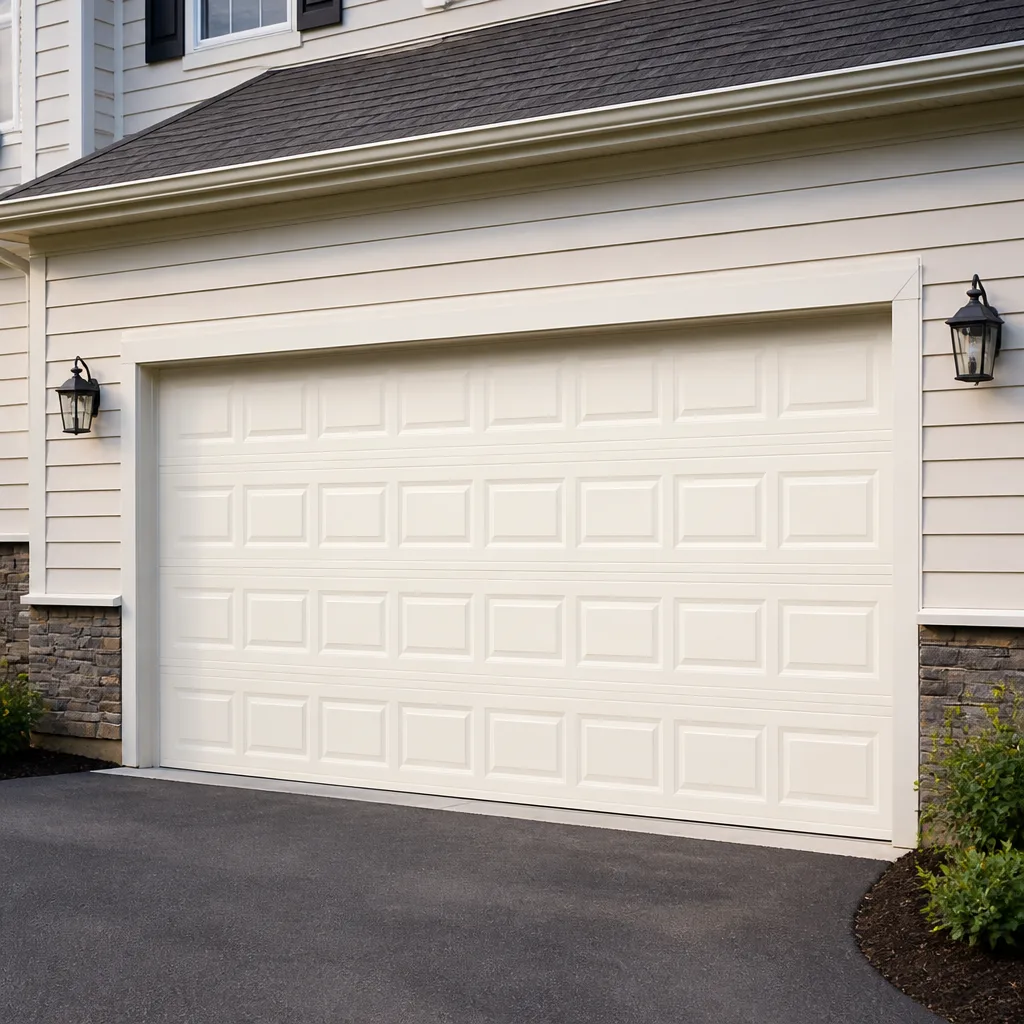
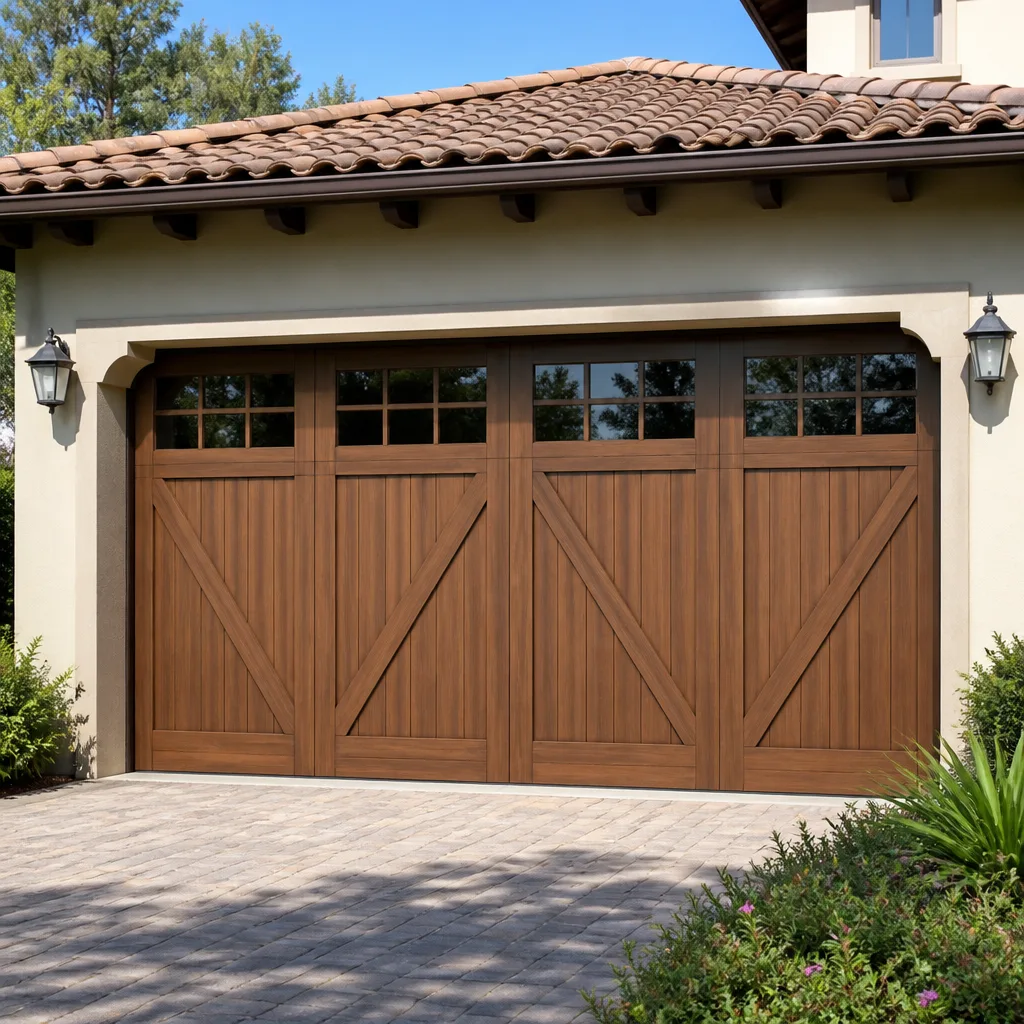
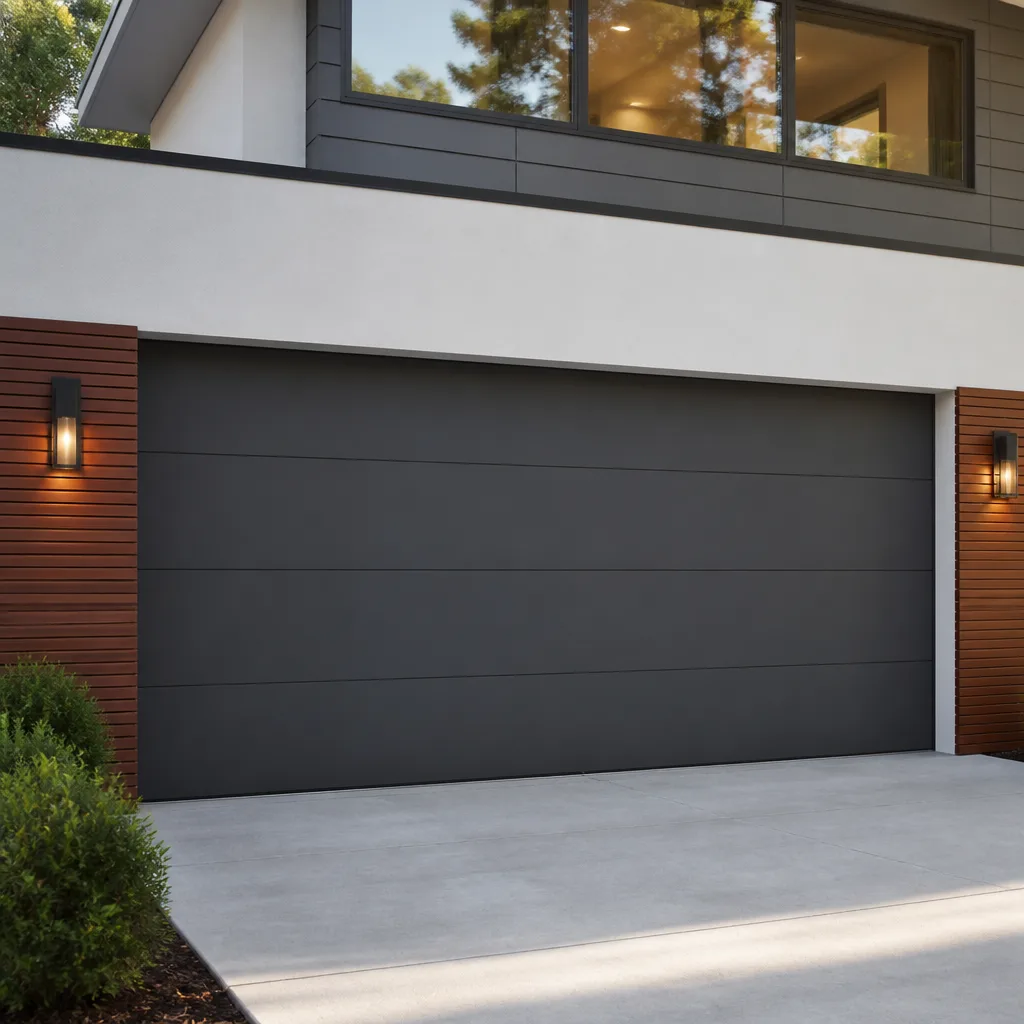
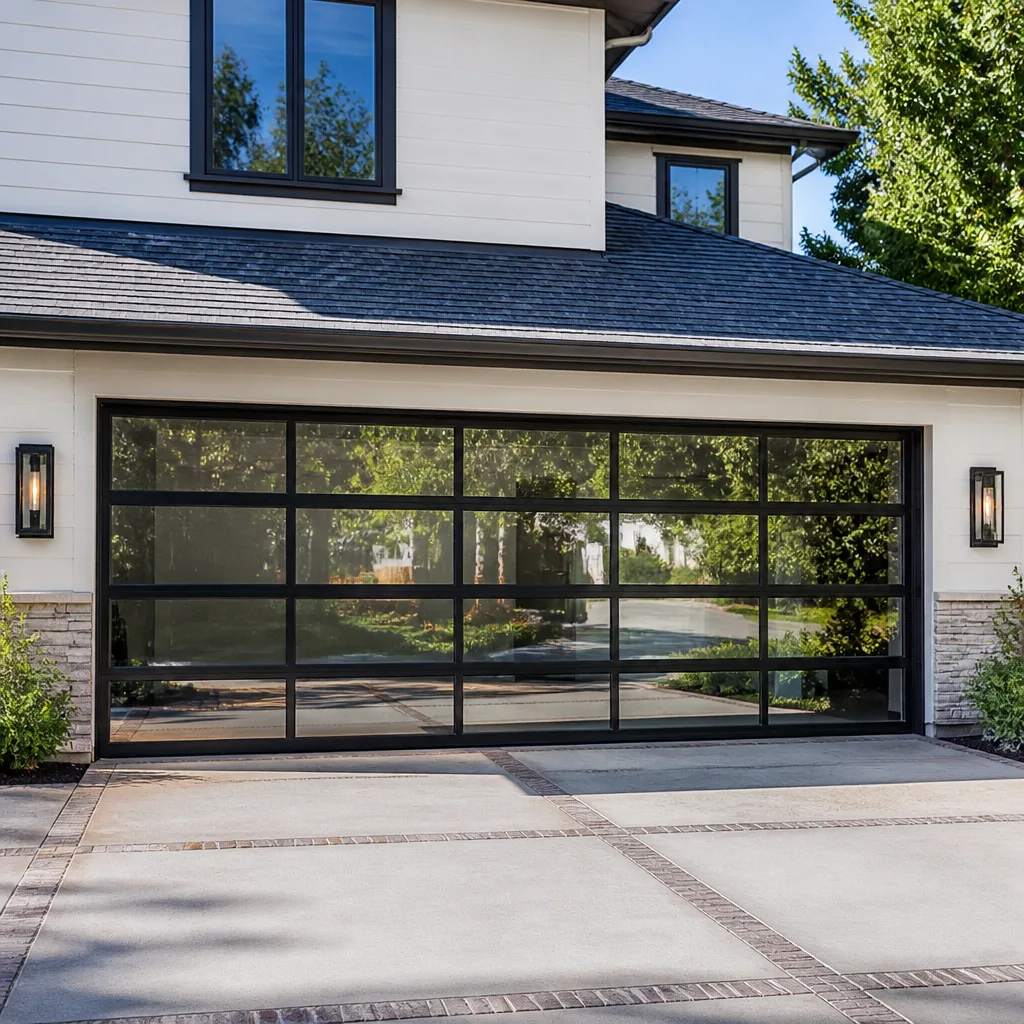
 Before
 After
After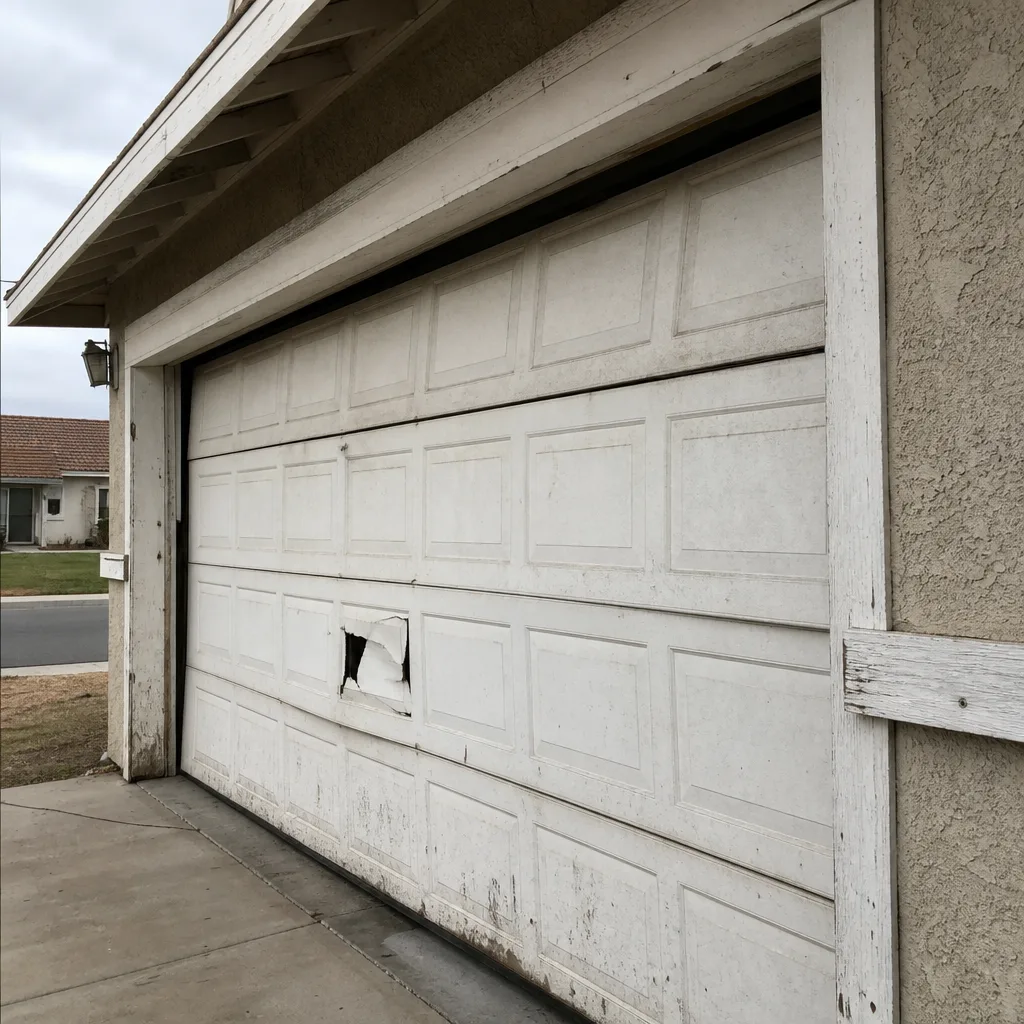 Before
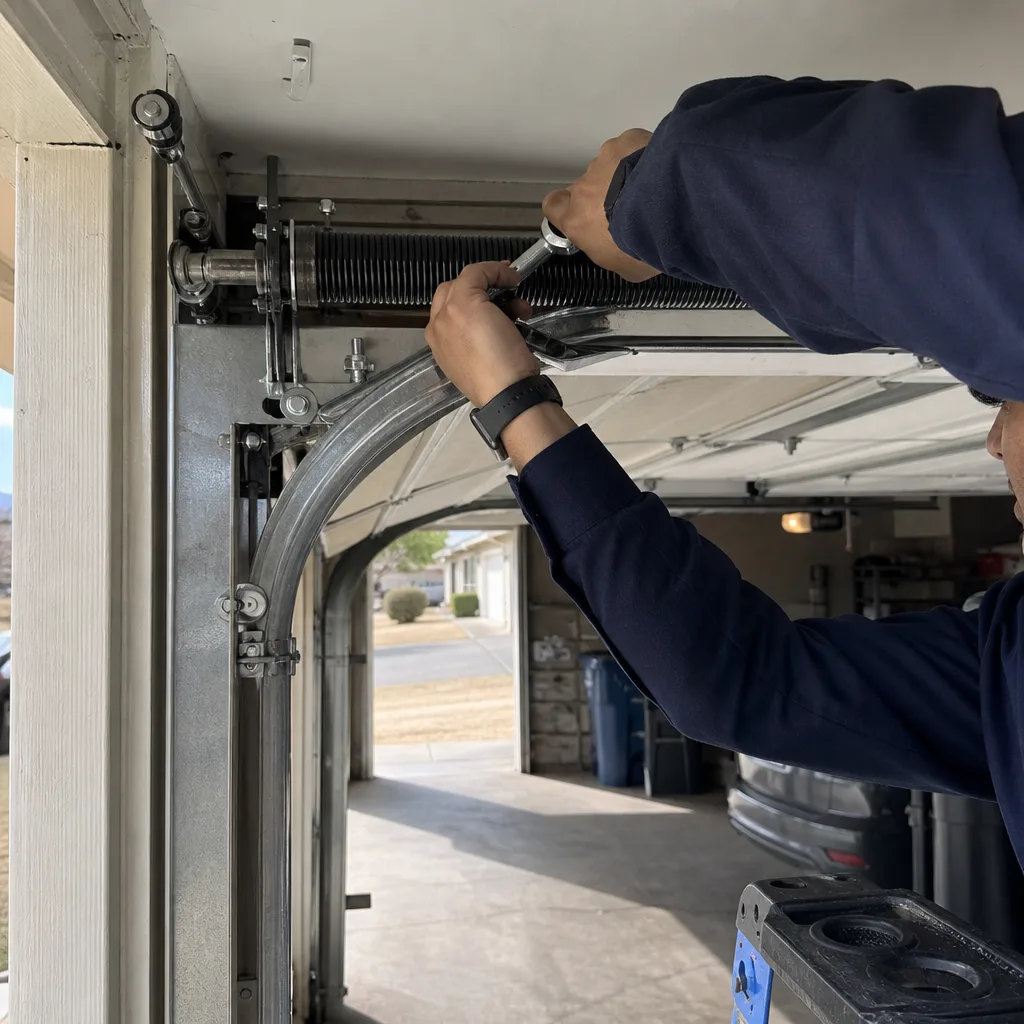 After
After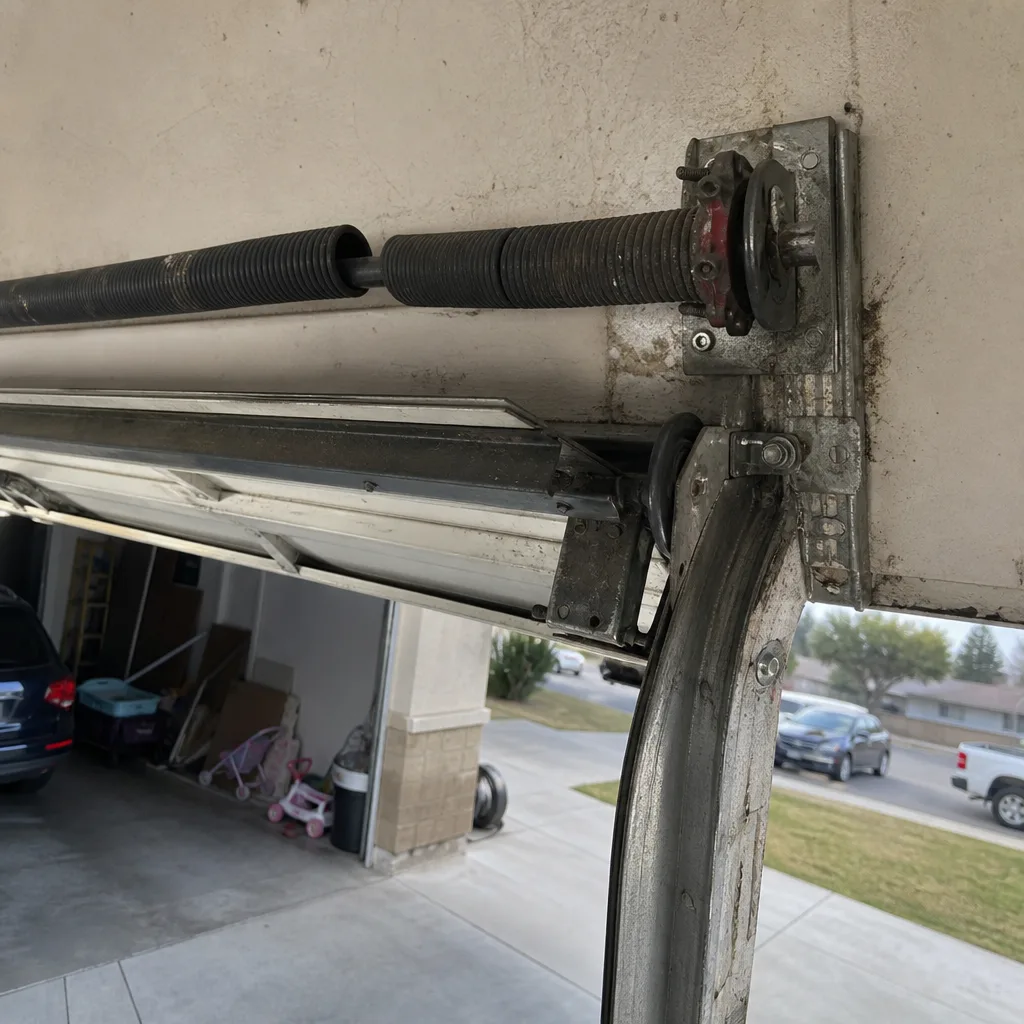 Before
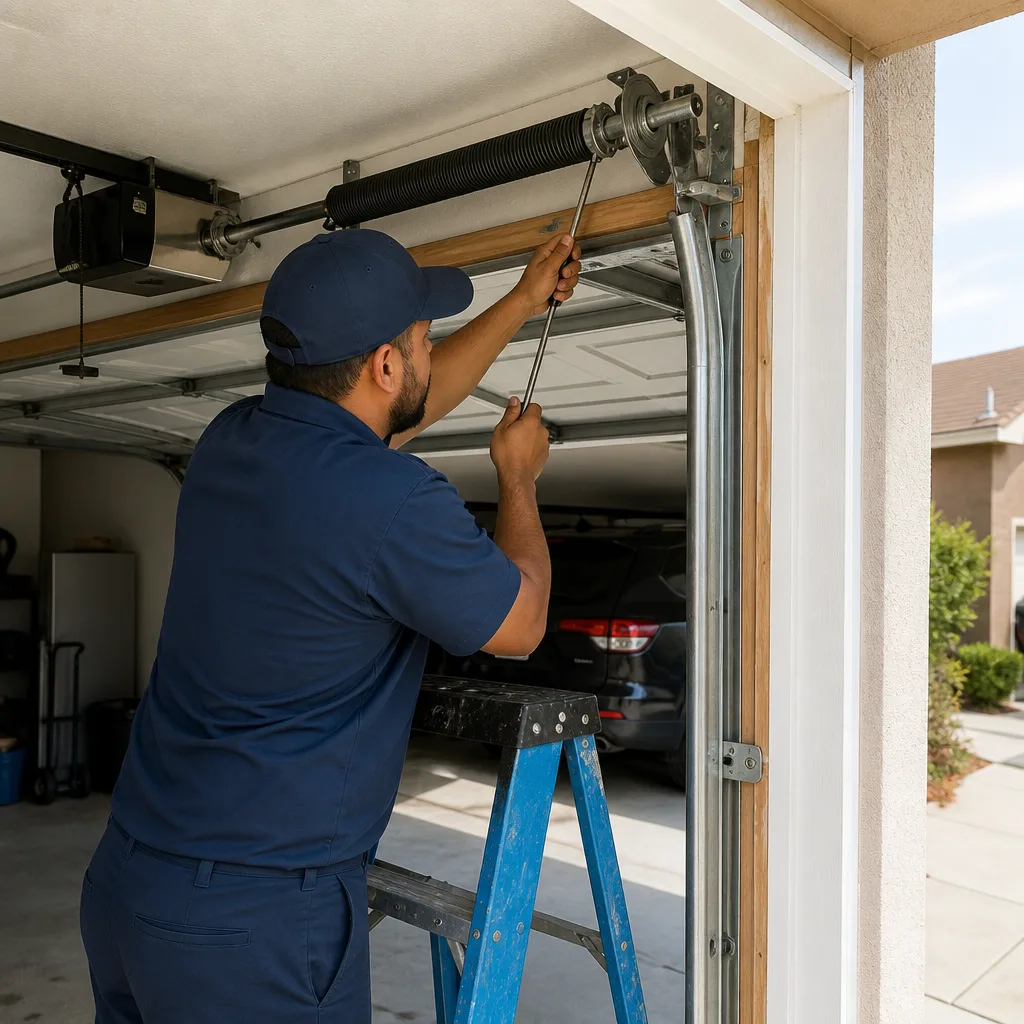 After
AfterGarage Door Warning Signs: A Palmdale Homeowner’s Reference Guide
A grinding sound when the door opens means one thing if it’s coming from the opener motor and a completely different thing if it’s coming from the roller bracket. One is a $15 fix. The other means the bracket is about to shear off the wall and drop 200 pounds of door. Same noise, completely different stakes. This guide-along with our complete guide to garage doors in Palmdale-will teach you how to tell the difference before the door tells you the hard way. We’ve been fixing garage doors in Palmdale since 2004, and we’ve learned that the Antelope Valley has a way of turning small door problems into big ones faster than most places.
Quick Answer
The most common garage door warning signs in Palmdale are grinding or squealing sounds tied to specific locations, a door that falls faster than it should, visible rust bleeding through the panel coating, a bottom seal that’s cracked into hard chunks, and an opener that hesitates or reverses for no clear reason. Most of these can be caught early with a five-minute check, but some of them mean stop using the door immediately and call a pro.
Table of Contents
- Sound-by-Sound: What Your Door Is Telling You
- Visual Signs Palmdala Heat Makes Worse
- Movement Signs You’re Probably Missing
- Opener Warning Signs in Palmdale’s Climate
- The Triage System: Urgent, Tomorrow, or Routine
- Common Mistakes to Avoid
- When to Call a Professional
- Frequently Asked Questions
Sound-by-Sound: What Your Door Is Telling You
Every garage door makes some noise. That’s normal. What’s not normal is when the noise changes pitch, gets louder over a few weeks, or settles into a rhythm that matches the door’s movement. In Palmdale, where the dry air pulls moisture out of lubricants and the summer heat bakes components, sounds tend to appear faster and escalate quicker than they do in coastal climates. Here’s how to narrow down what you’re hearing.
Grinding sound coming from the opener motor
If the grinding is coming from the metal box hanging from your ceiling, you’re almost always hearing a stripped gear inside the opener. This is common on older Chamberlain and LiftMaster units that use a plastic drive gear as a sacrificial part. The gear costs about $15 to $25, and replacing it takes a pro about an hour. It is not a reason to buy a new opener. If you catch it early, the repair is cheap. If you ignore it, the gear shreds completely and the door won’t move at all, usually with your car inside.
Grinding sound coming from the roller brackets
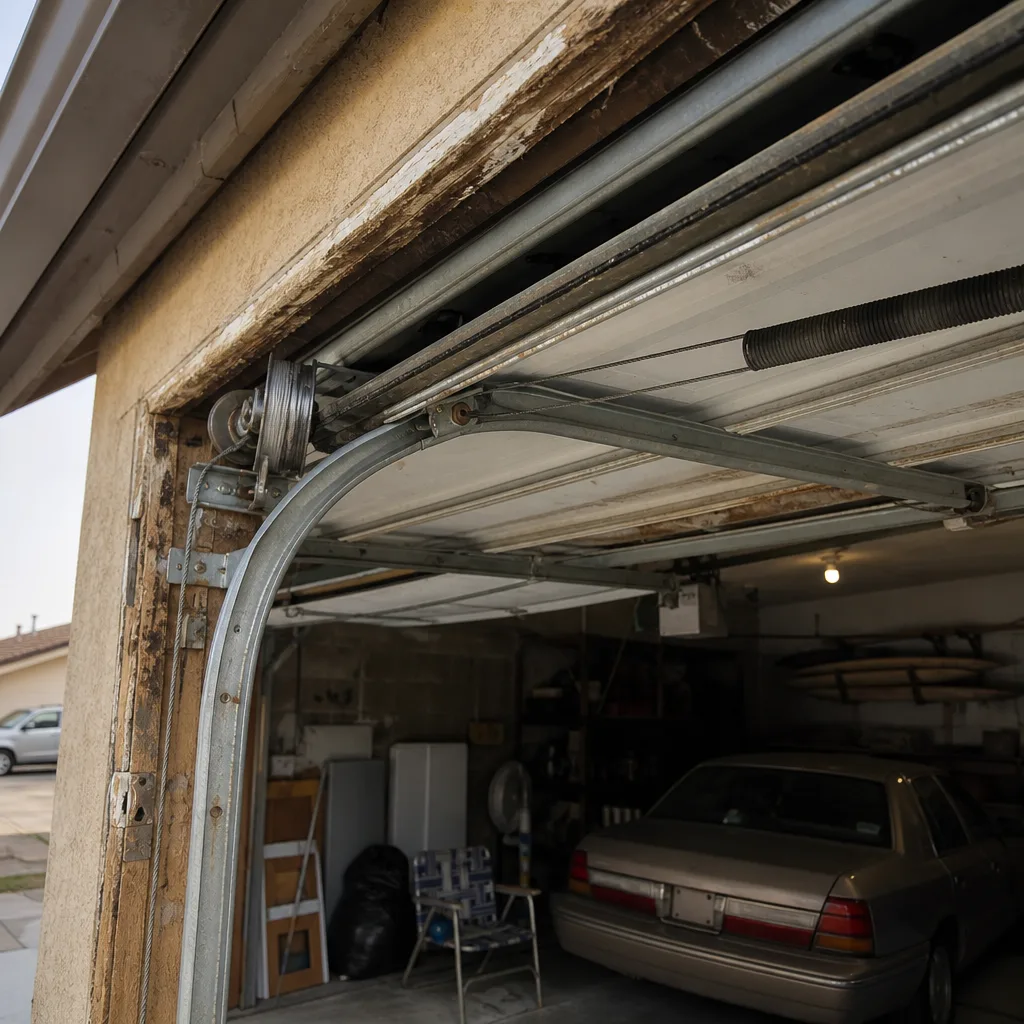
This one is the dangerous one. When the grinding is coming from the side of the door, near the wall where the hinges and rollers live, you’re hearing a roller that has seized and is being dragged along the track by brute force. That force is being applied through the bottom bracket. On a 16-foot steel door, that’s roughly 200 pounds hanging on two small bolts. In Palmdale, we regularly see bottom brackets that have rusted from years of temperature swings and the occasional monsoon-season splash, and a seized roller is often the last straw before the bracket tears loose. If you hear this sound, stop using the door and call us. It is the single most common serious failure we see, and it is almost always preventable.
Squealing or screeching from the rollers or hinges
A high-pitched squeal that follows the door’s travel usually means dry metal-on-metal contact. Rollers lose their lubrication and the ball bearings inside start grinding against the wheel. The fix is often as simple as replacing the rollers, which we do for well under $200 on most doors. Left alone, the same heat and dryness that caused the problem in the first place will turn that squeal into a grinding sound, and then into the bracket failure described above. We tell our Palmdale customers to think of roller noise the way you think of a brake squeal on your car: it’s the cheapest time to address it.
Popping or banging when the door moves
A single sharp pop when the door first starts moving usually means a tension cable slipping on the drum, or a spring that has started to settle unevenly. A rhythmic banging that happens every few inches of travel is often a bent track section or a roller wheel that has flat-spotted. Neither one fixes itself. The popping cable is especially urgent because if the cable lets go entirely, the spring’s tension is released unevenly and the door can drop on one side without warning. We’ve seen this happen in neighborhoods all over Palmdale, from the older homes near Palmdale Boulevard to the newer developments out by Rancho Vista.
Visual Signs Palmdale Heat Makes Worse
Palmdale gets more than 280 days of sun a year, and summer temperatures routinely sit above 100 degrees. Your garage door is the largest sun-facing surface on your house. Here’s what to look for when you walk out and actually look at the thing.
UV-bleached panel coating
Every steel garage door has a factory-applied coating that does two jobs: it makes the door look good, and it keeps moisture away from the steel underneath. Palmdale’s sun breaks that coating down faster than almost any other California climate. When you see fading, chalking, or a hazy white film on the panels, that’s the coating dying. The steel underneath is now exposed to the tiny amounts of moisture that collect at night when desert temperatures drop. Rust starts on the inside of the panel, where you can’t see it, and by the time it bleeds through the outside, the panel is structurally compromised. A faded door is not a cosmetic issue. It’s the early warning sign of a door that will need panel replacement or full replacement sooner than you think.
Bottom seal cracking patterns
Look at the rubber strip on the bottom of your door. In Palmdale, you’ll see two distinct cracking patterns. Normal wear looks like gradual thinning and small tears at the corners where the seal meets the track. Heat hardening looks different: the rubber turns brittle and breaks into small, hard chunks that fall off when you touch it. If your seal has turned into a crumbly mess, it’s been cooked by the sun reflecting off your driveway. A dead bottom seal means dust, heat, and critters get under the door, and your cooling bill climbs all summer. The replacement is inexpensive, and we do it on the same visit as almost any other job.
Rust at the bottom panel edges
This is where it starts. The bottom panel sits closest to the ground, which means it’s the first to catch splash-back from rain, the first to touch standing water during Palmdale’s occasional heavy storms, and the last to dry. Check the bottom corners of the lowest panel, especially on the side that faces the prevailing wind. Rust there tells you the coating has failed and the panel is losing structural integrity. We can often reinforce or replace the bottom panel before the problem spreads, but once rust reaches the panel’s interior structure, the door’s balance changes and the springs start working harder to compensate.
Movement Signs You’re Probably Missing
Most homeowners only notice their garage door when it stops working. The problem is that by then, the warning signs have been present for months. Here are the three movement checks we walk our Palmdale customers through over the phone, because they catch most problems before the door fails-part of the routine covered in our seasonal garage door care guide.
Door hesitation on the way up
When you hit the button, the door should start moving within one second and move smoothly from the floor to the open position. If it stutters, hesitates, or jerks before finding its rhythm, something is fighting the opener. It’s usually one of three things: a spring that’s lost tension and is asking the opener to do the lifting, a dry or misaligned track that’s creating drag, or an opener motor that’s starting to fail. The first two are cheap fixes. The third one is a decision to make with the facts in front of you, which is why we’d rather come look at it than guess over the phone.
Uneven gap at the top corners
Stand inside the garage with the door closed and look up. The top of the door should sit evenly against the header. If one corner has a wider gap than the other, the door is out of square. That can mean a cable has stretched, a spring is wearing unevenly, or a bracket has shifted. The door still opens and closes, so most people never notice. But an out-of-square door grinds against its own hardware on every cycle, which accelerates wear on every connected part. It’s a ten-second check, and it’s the first thing I do when I walk into a garage.
The “falls faster than it should” test
Disconnect the door from the opener using the red emergency release handle. Then manually lift the door to the halfway point and let go. A properly balanced door stays put or moves very slowly. If it drops, the springs have lost tension and the opener has been doing the lifting without you knowing it. In Palmdale’s heat, springs lose their cycle rating faster than the manufacturer’s estimate, because the metal expands and contracts daily and the lubricant inside the spring evaporates. This test takes sixty seconds. It will tell you more about your door’s health than almost anything else on this page.
- Close the door completely.
- Pull the red emergency release cord straight down. The door is now disconnected from the opener.
- Lift the door manually to chest height and let go.
- If the door stays in place, your springs are doing their job. If it drops more than a few inches, your springs are failing and the door is running on borrowed time.
- Reconnect the opener by pulling the release cord and running the opener until it re-engages.
A word of caution about this test: it will reveal a spring problem, but it will not fix one. If the door drops, don’t attempt to adjust or replace the springs yourself. Garage door springs are under enough tension to cause serious injury or death. A door is 200 pounds riding on two springs. Respect it.
Opener Warning Signs in Palmdale’s Climate
Garage door openers are machines, and machines wear out. But in Palmdale, the environment accelerates specific failure modes. Here’s what that looks like in practice, and what you should watch for if your opener is more than ten years old.
Thermal expansion in the rail
Opener rails are metal, and metal expands when it’s hot. In a Palmdale garage that hits 110 degrees in August, the rail can lengthen enough to affect the door’s travel. The symptom shows up as a door that stops short of fully open on hot afternoons but works fine in the morning. If you’re seeing that pattern, the rail needs adjustment or the opener’s limits need to be recalibrated. It’s a quick fix for a technician who knows to look for temperature-related behavior, and it’s something we deal with every summer.
Motor overheating signals
A garage door opener motor has a thermal overload switch that shuts the motor down when it gets too hot. In Palmdale, an opener that’s working against a door with failing springs will overheat fast, because it’s doing the work the springs used to do. The symptom is a door that quits halfway through a cycle, then works again twenty minutes later after the motor cools. Homeowners usually assume the opener is dying and buy a new one. In our experience, at least half the time the real problem is the springs, and the opener is just the messenger. If the opener is straining, the problem is almost never the opener.
The auto-reverse test you should do twice a year
Since 1993, all garage door openers sold in the US have been required to have an auto-reverse mechanism that reverses the door if it hits something while closing. In Palmdale, where temperature swings and dust can affect sensor alignment, we recommend testing this in spring and fall. Here’s how:
- Place a 2×4 or a roll of paper towels flat on the floor under the door’s path.
- Close the door using the wall button or remote.
- The door should hit the object and reverse within two seconds. If it doesn’t, the opener needs immediate attention.
- Also check the photo-eye sensors near the floor on each side of the door. Wave your hand between them while the door is closing. The door should reverse. If it doesn’t, the sensors are misaligned or dirty.
This test catches sensor drift, force-setting problems, and reverse mechanism failures before a pet or a grandchild becomes the test subject.
The Triage System: Urgent, Tomorrow, or Routine
Over twenty years of answering calls in Palmdale, I’ve developed a simple way to sort garage door problems into three buckets, as outlined in our step-by-step guide to hiring a garage door contractor. This is the same system I use with customers who call at nine at night wondering if they should keep using the door. Here it is.
Stop using the door now
- Grinding sound coming from the roller brackets, not the opener motor
- A cable that is visibly loose, frayed, or hanging off the drum
- The door falls fast when disconnected from the opener
- The door dropped on one side and is now crooked in the opening
- A broken spring, which usually sounds like a gunshot inside the garage
If you’re seeing any of these, use the side door tonight and call us in the morning. Or call tonight if you need the car out and the door won’t open. A live person answers our phone around the clock, and I quote the job on that call and hold the number when I get there.
Book it this week
- Door hesitates or stutters on the way up
- Uneven gap at the top corners when closed
- Squealing rollers that haven’t progressed to grinding
- Bottom seal that’s cracked into hard chunks
- Opener that stops mid-cycle and resets
These aren’t emergencies today, but every one of them becomes an emergency on a predictable timeline. In Palmdale’s heat, that timeline is shorter than you think.
Fine to book on your schedule
- Faded or chalky panel coating with no visible rust yet
- Occasional squeaks when the temperature changes
- Opener remote or keypad issues that don’t affect the door’s operation
- Cosmetic dents or dings that haven’t punctured the panel
- Worn weather stripping that’s still flexible enough to seal
These are the things to put on the list for the next regular service visit. We’ll take care of them while we’re there, and catching them early keeps them from becoming the second category.
Common Mistakes to Avoid
- Ignoring a sound because the door still works. The door always works until the day it doesn’t. Sounds are the earliest and most reliable warning system your door has, and they get louder while the underlying problem gets more expensive.
- Lubricating everything with WD-40. WD-40 is a solvent that strips lubricant. It cleans, then it dries, and the problem comes back worse in Palmdale’s dry air. Garage door rollers, hinges, and springs need a proper garage door lubricant, not whatever’s on the shelf in the kitchen cabinet.
- Replacing the opener when the springs are the problem. This costs homeowners hundreds of dollars they didn’t need to spend. The springs do the lifting, and the opener just moves the door. If the opener is struggling, check the springs first.
- Buying the cheapest rollers available. Cheap rollers have plastic wheels and no sealed bearings. In Palmdale, they’ll be making noise again within a year. Nylon rollers with sealed bearings cost a little more and last dramatically longer.
- Skipping the balance test because it looks complicated. It’s a sixty-second test, and it will tell you more about your door’s health than any other single check. When we do a Garage Door Repair in Palmdale visit, it’s the first thing we check.
- Assuming the door is fine because it was installed recently. Installers use whatever springs come with the door, and those springs are often rated for 10,000 cycles, which is about seven to ten years of normal use. A door installed in 2018 is due for spring assessment right now.
- Waiting until the door won’t open to call. The door that won’t open is almost always the result of weeks of ignored warning signs. Catching the problem early is always cheaper than waiting for it to fail, and in Palmdale, where the heat speeds up every timeline, waiting is the most expensive option.
When to Call a Professional
Here’s the honest truth: if you’re reading this guide and you’ve identified a sound or a behavior that concerns you, the single best thing you can do is call a professional who will look at it and tell you the truth. Some things can be fixed with a $15 part and an hour of work. Others require spring replacement or panel work that demands tools, training, and a healthy respect for stored energy. We never charge for an estimate, and we’ll tell you straight up whether the problem is urgent, can wait, or doesn’t need fixing at all. That’s how Otto’s Garage Door home has operated in Palmdale since 2004, and it’s why most of our business comes from neighbors telling neighbors. Call (661) 605-7159 and you’ll get me or one of my people on the line, ready to look at what you’re hearing and help you decide what’s next.
Frequently Asked Questions
A garage door with failing springs will drop when you disconnect it from the opener and lift it to the halfway point, instead of staying put. Other signs include the door feeling heavy when you lift it manually, the opener struggling or stalling, and a visible gap in the spring coils. In Palmdale, most springs last seven to ten years before they need replacement, and the heat shortens that timeline compared to coastal areas. Call (661) 605-7159 and I’ll quote the spring replacement on the phone and hold that price when I arrive.
A screeching sound usually means the rollers have lost their lubrication and the bearings are grinding against the wheel, or the hinges are running dry. It’s the cheapest repair in this guide, and it’s also the one that escalates fastest when ignored. The fix is usually a roller replacement and proper lubrication, done in about an hour. Call us at (661) 605-7159 and we’ll tell you if it’s just dry rollers or something more serious.
If the grinding is coming from the opener motor, you can usually keep using the door briefly while you schedule the gear replacement. If the grinding is coming from the side brackets, stop using the door immediately and call (661) 605-7159. That sound means a roller has seized and the bracket is under stress it wasn’t designed to take, and the next failure could drop the door without warning.
We recommend an inspection twice a year, timed with the spring and fall temperature shifts. Palmdale’s heat accelerates lubricant breakdown, coating failure, and spring fatigue, and a six-month check catches those problems before they become failures. We do a full safety inspection, balance test, and roller check on every regular service visit.
Intermittent opener operation in Palmdale often traces back to heat. The motor overheats and shuts down, then works again after it cools. But the overheating is usually caused by failing springs that force the opener to work harder than it should. We check the springs and the door balance before we do anything to the opener, because the opener is often just the symptom.
No. Garage door cables work directly with the springs, and both are under enough tension to cause serious injury. If you see a frayed cable or a cable that’s off the drum, stop using the door and call a professional. We handle cable replacement as part of our Garage Door Installation in Palmdale and repair work, and the price is quoted before we start.
It depends on the age of the opener, the nature of the failure, and what’s available for your specific model. Modern openers from LiftMaster, Chamberlain, and Genie have replacement parts readily available, and a gear or logic board replacement is often much cheaper than a new unit. If the opener is more than fifteen years old without the modern safety features, replacement through our Garage Door Opener in Palmdale service may make more sense. We’ll give you the numbers for both options and let you decide.
The Bottom Line
Your garage door talks. The sounds it makes, the way it moves, and the condition of its parts all tell a story about what’s wearing out and how long you have before it fails. In Palmdale, the heat and sun compress that timeline, which means the warning signs you ignore in March could be a broken door in August. Run the balance test. Listen for the difference between motor grinding and bracket grinding. Look at the bottom seal and the panel edges. A door is 200 pounds riding on two springs. Respect it, and it will serve you for decades. Ignore it, and it will eventually demand attention at the worst possible moment. If any of the signs in this guide look familiar, explore our more guides & resources or call (661) 605-7159 for a free estimate. We’ll tell you what’s urgent, what can wait, and what it costs up front, before we do anything.
Written by Otto Reinhardt, Owner at Otto’s Garage Door, serving Palmdale since 2004.