
Full 25-point door and opener safety check with every visit - springs, cables, rollers, tracks, and your LiftMaster or Chamberlain opener included
You get a price before we start. It does not change when the truck arrives.

 Before
 After
After Before
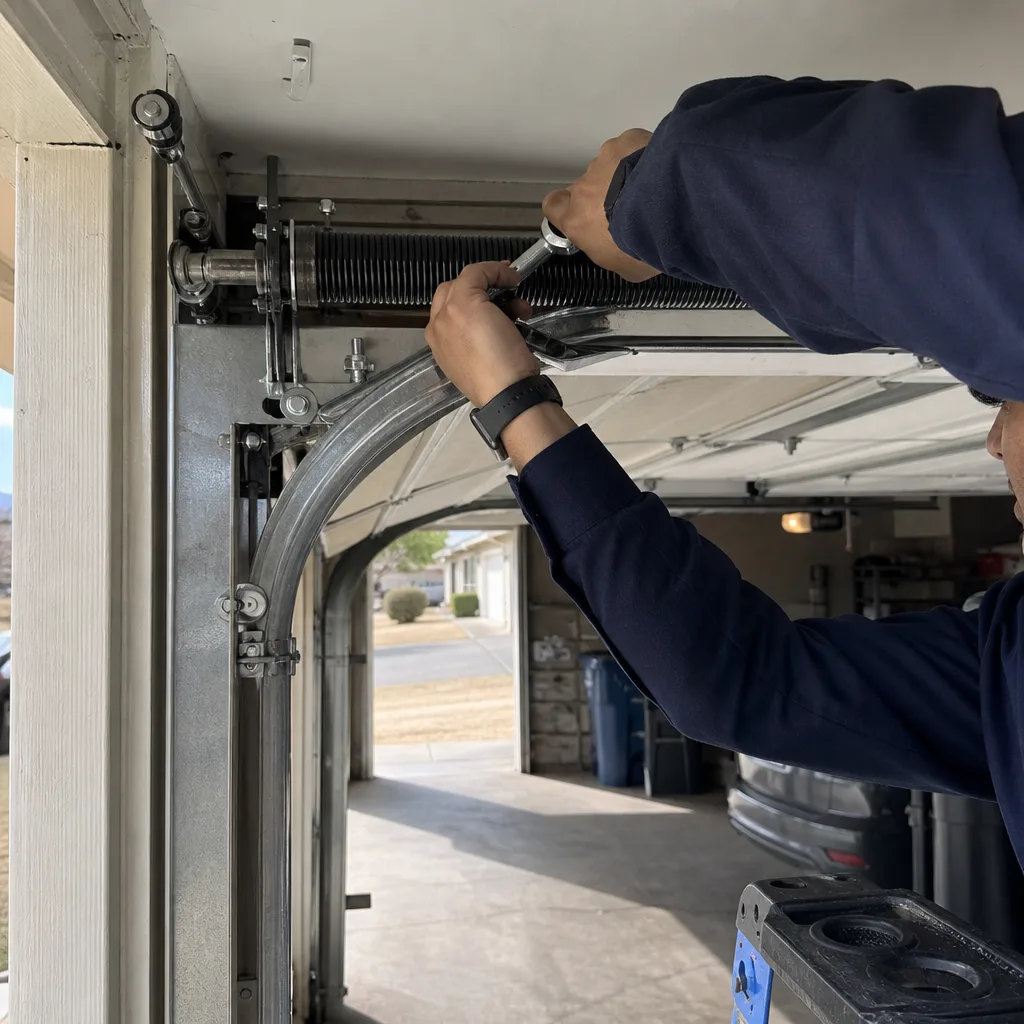 After
After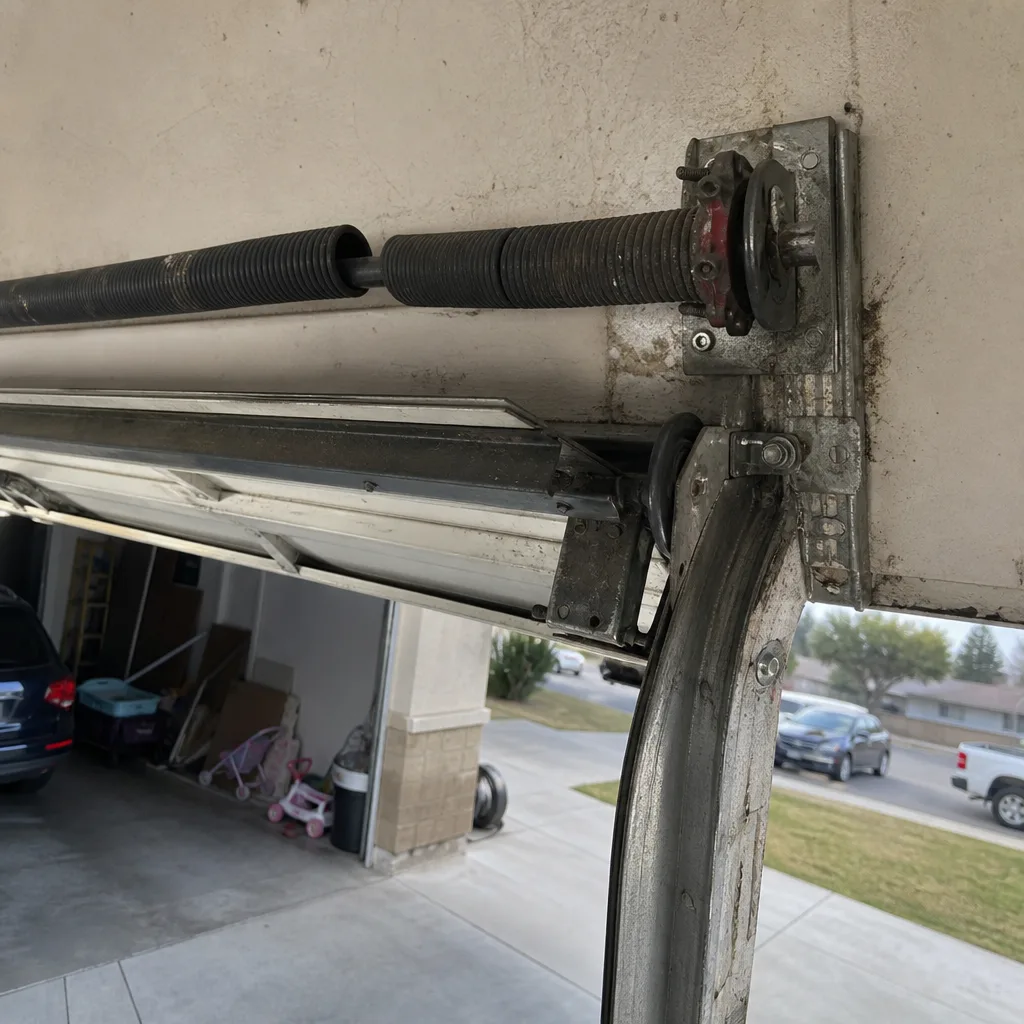 Before
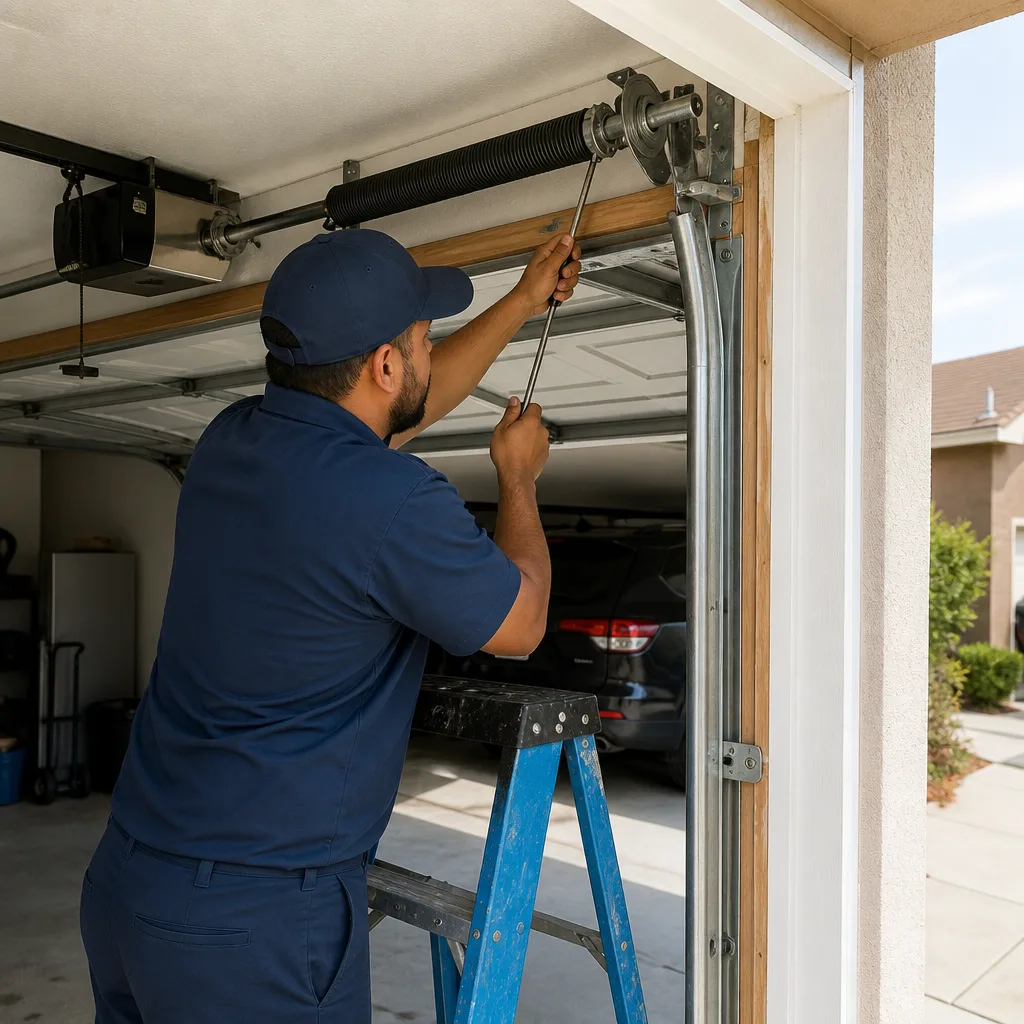 After
AfterLiftMaster Torsion Spring Replacement: The Palmdale Owner’s Guide
We stock and install LiftMaster-compatible torsion springs on our service trucks every day, and a typical replacement in Palmdale runs $180-$340 installed. Most jobs are done same-day, often within a couple hours of the first call. The way most people discover their spring is done: a bang from the garage that sounds like a car backfired, followed by a door that won’t budge no matter how many times you press the opener button. That’s the spring telling you its cycle count is up.
Here’s the thing about torsion springs: they don’t limp along. When one goes, it’s done. On a double-spring door, the second spring is usually close behind it, which is why we replace both at once rather than leaving you with a mismatched pair that throws the door off balance. Otto Reinhardt has been swapping these out across the Antelope Valley since 2004, and we’ve seen every failure mode the desert heat can throw at a spring. If I wouldn’t put it on my own door, it’s not going on yours.
-
Key Takeaways:
- Installed price in Palmdale: $180-$340, quoted before we start, never revised at the door
- We replace both springs on a two-spring door, not just the broken one
- Same-day availability on stocked springs, and a live person answers the phone 24/7 at (661) 605-7159
- Every job carries the 90-Day Done Right Promise in writing
Which LiftMaster Models This Applies To
LiftMaster builds torsion spring systems across their residential line, and the spring specs vary by door weight and height, not just by opener model. The common thread: LiftMaster’s residential openers from the 8500 and 9800 series side-mounts to the older chain and belt drive 1255 and 8355 models all pair with a standard torsion assembly above the door. The spring itself is sized to the door, so a 16×7 steel door in Palmdale’s Rancho Vista neighborhood takes a different wire size and length than a 9×7 aluminum door out by the Palmdale Transportation Center.
The compatibility gotcha most homeowners miss: LiftMaster’s wall-mount openers, like the 8500W and 98022, require the door to be properly balanced with correct springs or the opener torques itself apart. We see those jobs a few times a month. The spring tube, cable drums, and bearing plates are what carry the door’s weight, and if your springs are original LiftMaster parts from a door installed pre-2015, they’re likely at or past the 10,000-cycle lifespan. OEM LiftMaster-branded torsion springs are fine, but we generally install equivalent-cycle, quality aftermarket springs from the same manufacturers that supply the big brand labels. Same steel, same spec, fairer price, and honestly a lot of what LiftMaster sells under their own name is rebadged stock from those mills anyway. We’re an independent shop, not affiliated with LiftMaster, which means we match the spring to the door, not to a brand invoice.
To identify your spring, look for the color-coded paint line on the coil or the stamped wire-size number on the end cone. That tells us the wire gauge, inside diameter, and length. Your door’s weight and height do the rest. If you’re not sure, call (661) 605-7159 and read us what’s on the label. Otto can usually tell you the right spring over the phone.
Signs Your LiftMaster Torsion Spring Replacement Is Failing
- The door feels heavy when you pull the release cord and lift it manually. A healthy spring carries the door’s weight. When the spring is fatigued, the door feels like it weighs 150 pounds, because it does. The opener motor is then doing the spring’s job, which kills openers fast.
- The opener strains or reverses halfway up. LiftMaster openers have force settings, and when the spring isn’t assisting, the motor draws more current and trips its own safety reverse. Homeowners often blame the opener. The spring is almost always the culprit.
- You can see a gap in the coil. A broken torsion spring shows a visible break, usually a quarter-inch separation between coils. This can happen on either end of the spring. If you see a gap, stop using the door and call.
- Cables are slack or hanging off one side of the drum. When a spring breaks on one side of a two-spring door, tension shifts and the cable on that side goes loose. A hanging cable is a telltale sign the spring is done, not that the cable is the root problem.
- You hear a sharp bang and then the door won’t move. That’s the spring breaking under tension. It’s loud for a reason: a torsion spring can store several hundred pounds of force. The door dropping or jamming after is the spring energy releasing.
A door is 200 pounds riding on two springs. Respect it. If you see any of these signs, don’t keep cycling the opener to “test” the door. Every cycle on a broken or weak spring puts more strain on the opener, the hinges, and the panels, and it turns a $250 spring job into a $600 opener replacement or a ruined panel. We would rather come out and tell you it’s fine than have you wait until it isn’t.
Replacement Cost & What’s Included
In Palmdale, a LiftMaster-compatible torsion spring replacement runs $180-$340 installed, depending on spring size, wire gauge, and whether we’re doing one or both springs. Here’s the breakdown:
- Single spring (single-car door): $180-$260 installed, including the spring, labor, and balancing
- Double spring (double-car door): $240-$340 installed, both springs replaced as a matched pair
- High-cycle spring upgrade: adds roughly $40-$70, rated for 20,000-30,000 cycles versus the standard 10,000
That price is the whole job: the spring, the swap, checking the cables and drums, and balancing the door so the opener isn’t fighting it. We quote on the phone and hold that number at the door. If something changes when we see the door, we tell you before we touch anything and you approve the difference first. The work carries our 90-Day Done Right Promise, which says if it’s not done right, we come back and make it right. One call to Otto, not a ticket queue.
DIY or Call Us?
Truthfully, torsion springs are the one part of a garage door we genuinely urge you not to DIY. The spring is wound under several hundred pounds of tension, and the winding bars can slip. When they do, the bar turns into a projectile. Every year, people get badly hurt or killed working on torsion springs. It’s not scare talk. It’s the physics.
What you can safely check: look for the gap in the coil, check if a cable is hanging slack, and read us the color or label on the spring. Beyond that, leave the winding and unwinding to someone who has done it a thousand times. We show up with the right spring on the truck, tools calibrated for the job, and a door that balances the way LiftMaster designed it to. Call (661) 605-7159 and Otto quotes the job on that call. If the spring is broken this morning, we can be out today.
FAQs
A standard spring is rated for about 10,000 cycles, which in a desert climate with hot summers and cold winters usually works out to 7-10 years, though many fail earlier if the door is opener-operated daily and the spring wasn’t sized correctly from the start. In Palmdale, the bigger killer isn’t the heat itself, it’s the temperature swing. The steel expands and contracts, and springs out past Rancho Vista or off Lake Los Angeles see wild 40-degree daily swings that wear out the metal faster than coastal air. High-cycle springs add a second spring to a single door or upgrade the wire and length, and they push lifespan out to 15-20 years. If you want an exact read on what’s left on your springs, call (661) 605-7159 and we will count the cycles with you.
No. A broken torsion spring is done, and there is no patch job. You can’t reweld a stressed steel coil and expect it to hold tension safely, and anyone offering to “re-tension” a broken spring is either misinformed or cutting corners. The fix is a new spring, or pair of springs, sized to the door’s exact weight and height. We stock the common LiftMaster-compatible sizes on the truck, so the quote and the replacement happen on the same visit. And we always replace both springs on a two-spring door, because the surviving spring has the same cycle count and is living on borrowed time.
Most single-spring swaps take 45-90 minutes, and a double-spring replacement runs 1-2 hours, including balancing the door and testing the opener. We show up with the spring specs we quoted on the phone, so unless your door has an unusual axle or an older non-standard track, there’s no return trip. The job is done before lunch if you call early.
We carry the common LiftMaster-compatible spring sizes on every truck: the typical 2-inch inside diameter springs with common wire gauges and lengths for 7-foot and 8-foot doors. That covers most Palmdale homes we see. If your door takes an oddball spring, like on a custom wood door or a commercial-size panel, we can usually get it same-week and give you a written price before we order. We also stock springs and parts for Chamberlain and Genie doors, and we are fluent in all the major brands. Call (661) 605-7159 and we will tell you what’s on the shelf for your door.
Written by Otto Reinhardt, Owner, Otto’s Garage Door at Otto’s Garage Door, serving Palmdale and nearby areas.